Leave Your Message

7 Best High Performance Wire Ropes for Global Buyers

Choosing the right High Performance Wire Ropes can influence lifting safety, service life, and operating costs. Global buyers often compare strength, flexibility, corrosion resistance, and fatigue performance. Yet product labels rarely tell the whole story.

This guide examines seven leading wire rope options for demanding industrial environments. Each selection is considered through practical criteria, including breaking force, construction, core design, lubrication, and resistance to repeated bending. A rope working over a compact sheave needs different qualities from one used on a large offshore crane. Small details matter. Drum compatibility matters too.

Real purchasing decisions also depend on climate, maintenance access, replacement schedules, and supplier support. Salt air, freezing temperatures, dust, and heavy vibration can expose weaknesses quickly. Reliable manufacturers should provide clear technical data, batch traceability, inspection guidance, and suitable test documentation. These details help buyers compare products with greater confidence.

No single rope is perfect. A high-strength design may sacrifice flexibility, while a flexible rope may require more frequent inspection. This guide recognizes those trade-offs instead of presenting a simple universal winner. Some recommendations may change after field testing, which is worth acknowledging. Buyers should verify specifications against their equipment, working load, sheave dimensions, and operating conditions before ordering. Practical experience remains essential. Careful selection prevents expensive surprises.
7 Best High Performance Wire Ropes for Global Buyers

What Defines a High-Performance Wire Rope for Global Buyers

What Defines a High-Performance Wire Rope for Global Buyers

A high-performance wire rope begins with predictable strength, not impressive advertising. Buyers should examine tensile grade, breaking load, and safety factor together. A rope must also resist repeated bending across sheaves without rapid fatigue. Flexible construction can improve movement, but it may reduce resistance to crushing. The right balance depends on the crane, winch, or lifting system.

Corrosion resistance matters in ports, offshore areas, mines, and humid warehouses. Galvanized surfaces, suitable lubricants, and sealed storage can extend service life. Core design, wire arrangement, and dimensional consistency also affect handling. Traceable test reports provide stronger evidence than a polished product page. Check manufacturing records, inspection methods, and applicable technical standards before approval. Support matters too. Clear installation guidance can prevent expensive mistakes.

Tips: Compare ropes under the same load conditions. Inspect broken wires, diameter loss, birdcaging, and rust regularly. Keep a simple service log with dates, loads, and replacement decisions. Do not select only by price. I have seen low-cost choices create more downtime than savings. No rope is perfect. Temperature, shock loading, poor alignment, and neglected lubrication can defeat a strong design. Buyers should review real operating conditions with an engineer, because catalog values rarely show the whole story.
Key Materials and Construction Types Used in Advanced Wire Ropes

High-performance wire ropes are not defined by steel grade alone. For global buyers, material choice and construction determine fatigue life, flexibility, corrosion resistance, and inspection needs. Bright carbon steel offers high strength and controlled cost for dry, protected environments. Galvanized steel adds a zinc barrier, making it more practical near moisture and changing weather. Stainless steel resists corrosion better, but its price and strength balance require careful engineering. Coatings can improve surface protection, though damaged coatings may hide wear.

Construction changes how a rope behaves under load. A 6x19 design offers useful abrasion resistance and moderate flexibility. A 6x37 design uses finer wires, improving bending performance over smaller sheaves. An independent wire rope core supports shape and heat resistance during heavy lifting. Fiber cores reduce weight and improve flexibility, but they may compress under high pressure. Compacted strands create a smoother surface and higher metallic area. They often perform well where wear and fatigue occur together.

Rotation-resistant constructions help control torque in long, suspended lifts. Their layered strands need accurate installation and regular inspection. No construction is universally best. I have seen buyers focus on breaking strength while overlooking drum diameter and bending cycles. That choice can shorten service life. Check rope lay, lubrication, core type, and working temperature before approval. A practical specification should also define discard criteria, because visual inspection alone may miss internal damage.

Seven Leading High-Performance Wire Rope Options by Application

7 Best High Performance Wire Ropes for Global Buyers

Seven Leading High-Performance Wire Rope Options by Application

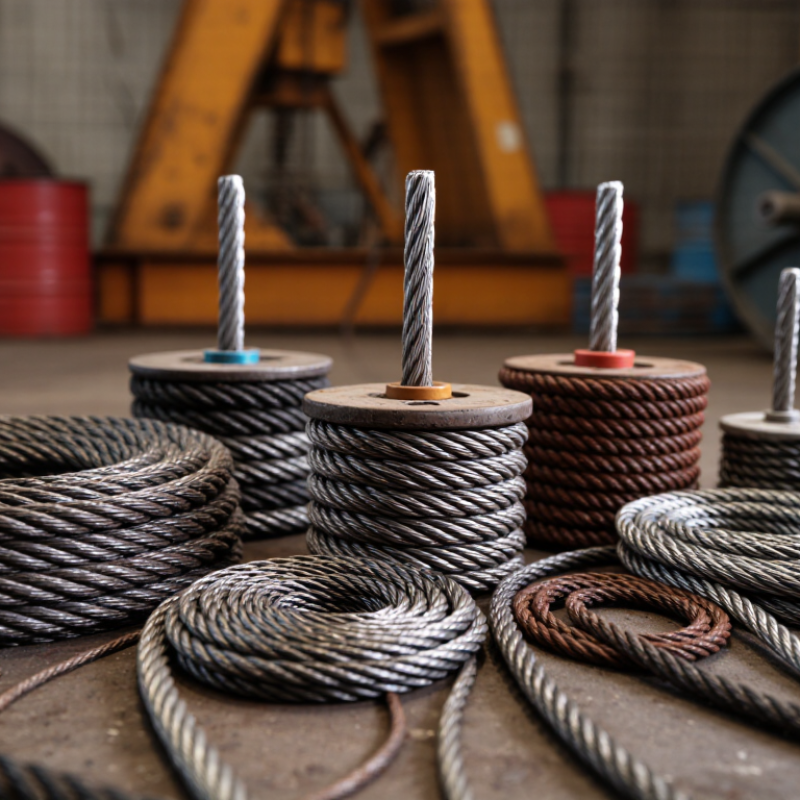
Global buyers should select wire rope by load movement, environment, and inspection access. The Grand View Research 2024 market report identifies construction, mining, marine, and industrial handling as major demand areas. Seven practical options stand out: rotation-resistant rope for tower cranes; compacted-strand rope for heavy lifting; swaged rope for high-cycle hoists; galvanized rope for outdoor cranes; stainless steel rope for coastal equipment; plastic-coated rope for handrails and control systems; and elevator rope for passenger transport. Each design solves a different problem. None is perfect.

Rotation-resistant and compacted ropes provide better shape retention under demanding lifts. Galvanized rope offers useful corrosion resistance, but salt exposure still requires regular cleaning. Stainless steel performs well near seawater, although its cost can rise sharply. Swaged construction creates a smoother surface and can improve drum contact. Elevator rope needs exact compatibility with sheaves, grooves, and safety systems. ISO 4309 provides inspection and discard guidance, while ASME B30.30 addresses rope use in lifting equipment. These standards support reliable purchasing decisions, not careless substitution.

Tips: Request minimum breaking force, lay direction, core type, lubrication details, and fatigue data. Check the certificate against the actual rope diameter. A rope that looks stronger may fail sooner under bending. Inspect broken wires, corrosion, crushing, and diameter loss. My practical caution is simple: supplier claims deserve verification through independent testing and site records. Some buyers still focus only on breaking strength. That is an avoidable mistake.

How to Compare Strength, Durability, Safety, and Flexibility

When comparing high-performance wire ropes, strength is only the starting point. A 2024 technical report from the World Steel Association recorded 1.89 billion tonnes of global crude steel production in 2023. That scale supports broad material access, but quality still depends on wire grade, tensile consistency, and controlled heat treatment.

Durability requires more than a high breaking load. ISO 4309:2017 evaluates broken wires, rope diameter reduction, corrosion, and deformation during service inspections. Buyers should request fatigue-test results, lubrication details, and traceable batch records. A rope surviving repeated bending is more valuable than one showing impressive laboratory strength. That distinction is often missed.

Flexibility depends on construction. More wires and smaller outer wires usually improve bending performance, but they may reduce abrasion resistance. A compacted rope can resist crushing on a drum, yet it may demand stricter installation control. OSHA’s lifting-equipment guidance also emphasizes inspection, proper operation, and removal of damaged rope from service. Safety is practical. Check the fleet’s sheave diameter, drum groove, operating temperature, and shock loading before selecting a specification. I would not rely on catalog strength alone; real loading is rarely so polite.

7 Best High Performance Wire Ropes for Global Buyers

Comparative performance index based on common wire-rope construction characteristics. Scores are normalized from 1 to 10; actual capacity depends on diameter, steel grade, core type, rope grade, manufacturing quality, and applicable standards such as ISO 2408.

How to read the chart: Higher strength and durability scores indicate better resistance to load and wear, while higher safety and flexibility scores reflect improved fatigue performance, handling, and operating reliability. Select the rope construction according to the application, design factor, fleet angle, bending cycle, and regulatory requirements.

Global Buying Factors: Standards, Suppliers, Costs, and Shipping

High-performance wire ropes are not interchangeable, even when their diameters match. Global buyers should compare seven performance categories: rotation-resistant, compacted, galvanized, stainless steel, plastic-coated, fiber-core, and high-temperature constructions. Each responds differently to lifting cycles, abrasion, moisture, and bending fatigue.

Standards create the first quality checkpoint. Request material certificates, breaking-load data, dimensional tolerances, and inspection records aligned with the destination market. Confirm whether tests cover the complete rope or only sample wires. That distinction matters. A supplier with traceable heat numbers and consistent factory records is easier to audit. Factory experience matters too. Ask for fatigue-test methods, lubrication details, and production photos. Photos alone prove little.

Price should be calculated per working life, not per metre. A cheaper rope may lose value after rapid crushing or corrosion. Compare minimum breaking force, safe working limits, replacement intervals, and spare inventory. Shipping adds hidden risk. Confirm coil length, reel dimensions, gross weight, moisture protection, and export documents before payment. Salt air can damage poorly sealed coils during a long voyage. Incoterms, insurance, customs classification, and port handling should be written clearly. Buyers often focus on unit price, then discover that oversized reels doubled inland transport costs. This mistake is avoidable, although planning is not always simple.

7 Best High Performance Wire Ropes for Global Buyers - Global Buying Factors: Standards, Suppliers, Costs, and Shipping
Rank Wire Rope Type Typical Construction and Material Common Diameter Range Typical Strength Grades Performance Advantages Relevant International Standards Typical Applications Supplier Qualification Checks Indicative Export Cost Shipping and Packaging Factors
1 6×36 IWRC Rotation-Resistant General-Purpose Rope Six strands around an independent wire rope core; commonly supplied in bright or galvanized carbon steel. 10–32 mm for common lifting and industrial orders 1,570–1,960 MPa nominal wire strength grades Good balance of flexibility, fatigue resistance, abrasion resistance, and breaking strength. More flexible than many 6×19 constructions. ISO 2408 EN 12385-4 ASTM A1023/A1023M Cranes, winches, material handling, offshore auxiliary lifting, and general industrial equipment. Verify tensile-test reports, lay direction, core type, lubrication, diameter tolerance, minimum breaking force, and traceability by reel. Approximately US$3.00–6.50/kg Usually shipped on steel or treated-wood reels. Confirm reel diameter, gross weight, maximum reel height, moisture protection, and container payload before booking.
2 6×19 IWRC High-Abrasion Rope Six strands with a 19-wire strand pattern and independent wire rope core; bright or galvanized carbon steel is common. 8–38 mm 1,570–1,960 MPa nominal wire strength grades Larger outer wires provide strong abrasion resistance and relatively good resistance to crushing on drums. ISO 2408 EN 12385-4 ASTM A1023/A1023M Earthmoving equipment, draglines, winches, elevators, guy lines, and applications with abrasive contact. Check actual measured diameter, lay length, metallic area, coating mass for galvanized wire, and compatibility with the sheave groove. Approximately US$2.80–6.00/kg Dense reels can exceed normal manual-handling limits. Request the packed reel weight, cubic volume, lifting points, and export fumigation documents when wood packaging is used.
3 8×19 Compacted Strand Crane Rope Eight strands with a compacted or swaged profile around a fiber or steel core, depending on the equipment design. 10–40 mm 1,570–1,960 MPa nominal wire strength grades High metallic area, improved crushing resistance, good fatigue performance, and a smoother outer surface for repeated drum service. ISO 2408 EN 12385-4 ASME B30.30 Tower cranes, mobile cranes, overhead cranes, hoists, and multi-layer drum systems. Confirm compaction process, rotation behavior, drum-layer suitability, bending ratio, minimum breaking force, and inspection documentation. Approximately US$4.00–8.50/kg Specify the required cut length and end termination before shipment. Long-length reels may require special container loading or break-bulk transport.
4 19×7 Rotation-Resistant Rope Multi-layer construction with a steel core; designed to reduce torque and spin under a freely suspended load. 6–32 mm 1,570–1,960 MPa nominal wire strength grades Reduced tendency to rotate compared with conventional single-layer ropes; suitable for single-part and multi-part lifting systems when correctly selected. ISO 2408 EN 12385-4 ASME B30.30 Mobile cranes, telescopic cranes, hoists, lifting magnets, and applications requiring improved load control. Confirm rotation-resistance classification, installation instructions, end termination requirements, fleet angle limits, and the applicable safety factor. Approximately US$5.00–10.00/kg Protect against kinking during loading and unloading. Reels should be securely chocked, banded, and marked with rope construction, diameter, length, batch, and gross weight.
5 35×7 Non-Rotating Heavy-Lift Rope Multiple strands arranged in several layers around a steel core; engineered for very low rotation under load. 20–56 mm 1,570–1,960 MPa nominal wire strength grades Excellent rotational stability and high strength for heavy lifting, but requires careful handling, correct reeving, and controlled installation. ISO 2408 EN 12385-4 ASME B30.30 Heavy-lift cranes, offshore cranes, deep foundation equipment, subsea handling, and high-capacity hoisting systems. Request a type-test certificate, minimum breaking force report, rotational performance data, recommended sheave ratio, and installation procedure. Approximately US$6.00–12.00/kg High reel weights can affect inland haulage and port handling. Confirm crane or forklift requirements, reel orientation, lashing plan, and insurance coverage for project cargo.
6 8×K19 Compacted High-Strength Rope Eight compacted strands around a steel core, with a dense metallic cross-section and relatively smooth outer surface. 16–50 mm 1,770–2,160 MPa nominal wire strength grades High minimum breaking force for a given diameter, strong resistance to drum crushing, and improved wear behavior in intensive service. ISO 2408 EN 12385-4 API Spec 9A Offshore winches, mining hoists, heavy-duty cranes, dredging systems, and high-load drum equipment. Verify whether the specified grade is approved for the application, along with breaking force, compacted diameter, fatigue test results, lubricant type, and batch traceability. Approximately US$5.50–11.00/kg Export buyers should confirm corrosion-protection wrapping, reel dimensions, hazardous-area documentation where relevant, and whether the shipment requires a heavy-lift surcharge.
7 Stainless Steel 7×19 Flexible Rope Seven strands with 19 wires per strand, normally manufactured from corrosion-resistant stainless steel such as AISI 304 or AISI 316. 1.5–16 mm Approximately 1,570–1,960 MPa, depending on alloy, size, and finish Excellent flexibility and improved resistance to atmospheric, marine, and chemical corrosion compared with carbon-steel rope. ISO 2408 EN 12385-4 ASTM A492/A492M Marine fittings, architectural cable systems, food-processing areas, outdoor control cables, rigging, and corrosion-sensitive equipment. Confirm alloy certificate, surface finish, actual breaking force, magnetic or non-magnetic requirement, corrosion environment, and compatibility of terminals with stainless steel. Approximately US$8.00–20.00/kg Smaller coils or compact reels are common. Use clean, dry packaging and avoid carbon-steel contamination during handling and container loading.
Buying note: Cost ranges are indicative export-market estimates for standard industrial quantities and may vary by diameter, steel grade, coating, construction, certification, order volume, destination, and freight conditions. The applicable standard, minimum breaking force, safety factor, drum geometry, and local lifting regulations should be confirmed before purchase.