Why Choose Heavy Duty Crane Rope for Your Lifting Needs?
When it comes to lifting heavy loads, choosing the right equipment is crucial. "Heavy Duty Crane Rope" stands out as a top choice for professionals in various industries. This rope offers exceptional strength and durability, making it ideal for demanding lifting applications.
Crafted from advanced materials, Heavy Duty Crane Rope ensures reliability under extreme conditions. It can withstand significant stress, reducing the risk of failures during operations. Yet, not all ropes are created equal. Professionals must consider factors like length, diameter, and material type.
Understanding these details makes a difference. Reliable suppliers offer expertise, helping you select the right Heavy Duty Crane Rope for your specific needs. Investing time in research and asking the right questions can prevent costly mistakes. The right choice can enhance safety and efficiency, ultimately leading to better project outcomes.
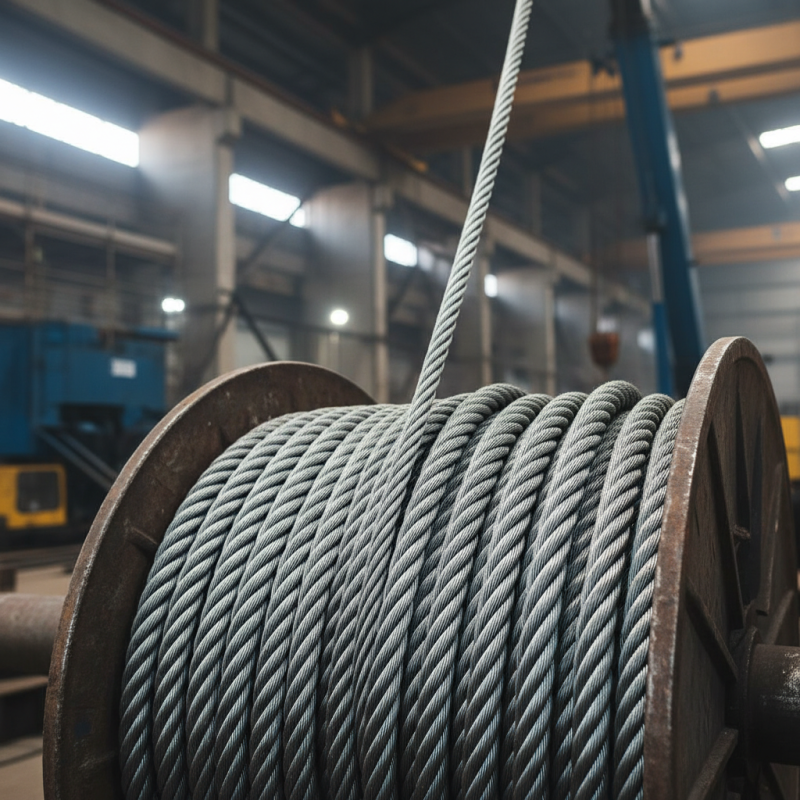
Understanding the Importance of Heavy Duty Crane Rope in Lifting Applications
Heavy duty crane rope plays a crucial role in lifting applications. Its significance stems from its ability to handle immense weights and resist extreme conditions. According to industry reports, high-performance ropes can lift loads exceeding 100 tons with minimal stretching. This is vital in construction and shipping industries where safety is paramount.
The material used in these ropes often includes steel wire strands. They exhibit superior strength compared to conventional fibers. A recent study indicated that steel ropes have a fatigue life of over 1 million cycles under standard operational conditions. This durability lowers maintenance costs and enhances overall safety.
However, there are challenges. Not all heavy duty ropes are created equal. Selection mistakes can result in failures, leading to accidents. It’s essential to assess the specific lifting conditions and requirements before choosing a crane rope. This attention to detail can prevent costly damages and ensure reliable performance in critical applications.
Why Choose Heavy Duty Crane Rope for Your Lifting Needs?
| Dimension |
Specification |
Material |
Load Capacity (tons) |
Application |
| Diameter 10mm |
Standard |
Polyester |
2 |
Construction |
| Diameter 12mm |
High Tenacity |
Nylon |
4 |
Aviation |
| Diameter 16mm |
Durable |
Polypropylene |
6 |
Maritime |
| Diameter 20mm |
Heavy Duty |
Steel Wire |
10 |
Industrial |
| Diameter 25mm |
Extreme Strength |
Aramid |
12 |
Mining |
Key Benefits of Using Heavy Duty Crane Rope for Safety and Durability
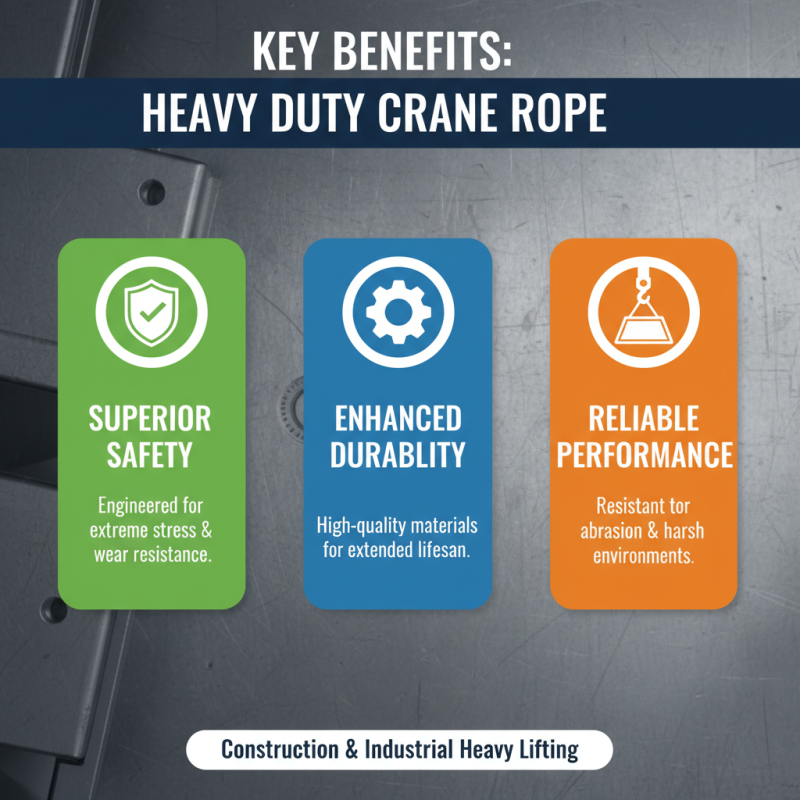
When it comes to lifting, safety and durability can't be overlooked. Heavy duty crane ropes are designed to withstand immense stress and wear. They are often made from high-quality materials, providing reliable performance in demanding applications. Their resistance to abrasion and harsh environments makes them ideal for heavy lifting in construction and industrial settings.
Using heavy duty crane rope significantly reduces the risk of accidents. Unlike lighter ropes, they offer higher tensile strength. This means they can lift heavier loads without the fear of snapping. Professionals often highlight that these ropes contribute to safer work conditions. A reliable crane rope can prevent failures that lead to injury or damage.
Moreover, durability is a vital aspect. Heavy duty ropes often have a longer lifespan. They resist environmental factors like moisture and UV rays. Consequently, this reduces the frequency of replacements. However, cost considerations may prompt some to opt for cheaper alternatives. This is a mistake. Investing in quality is essential for long-term safety and efficiency. Future repairs or accidents can outweigh initial savings.
Comparing Heavy Duty Crane Rope with Other Lifting Materials
Heavy duty crane ropes are essential for ensuring safety and efficiency in lifting operations. Compared to traditional lifting materials like chain slings or synthetic ropes, heavy duty crane ropes offer superior tensile strength. According to industry reports, high-performance steel ropes can handle loads of up to 200 tons. This capability reduces the risk of equipment failure and enhances operational safety.
While chain slings are durable, they can be heavy and cumbersome. Heavy duty crane ropes, on the other hand, are lightweight and easier to handle. They can significantly reduce operator fatigue during repetitive lifting tasks. Moreover, they are less prone to corrosion, making them suitable for harsh environments. Recent studies suggest that using high-quality crane ropes can improve lifting efficiency by up to 30%.
However, there are limitations. Heavy duty crane ropes require regular inspection and maintenance to ensure safety. Operators need to be trained in proper usage techniques to prevent potential accidents. In some cases, the initial cost of heavy duty crane ropes can be higher than alternatives. Balancing these factors is crucial for effective decision-making in lifting operations.
How to Choose the Right Heavy Duty Crane Rope for Your Specific Needs
Choosing the right heavy-duty crane rope
requires careful consideration of several factors.
Load capacity is paramount. You need to understand the maximum weight your crane will lift.
Reports indicate that most heavy-duty crane ropes can handle loads ranging from 1 to 100 tons.
However, the choice should align with your operational needs.
Material is another critical factor. Heavy-duty ropes can be constructed from a variety of materials, including steel and synthetic fibers.
Steel ropes provide durability but can be heavier and less flexible.
In contrast, synthetic ropes are lightweight and easier to handle, sacrificing some load capacity.
Industry statistics show that synthetic ropes can reduce weight by up to 50%.
You must also evaluate the working environment. Exposure to harsh weather or chemicals can affect rope lifespan. Some materials resist abrasion, while others may weaken in extreme conditions.
It’s essential to consider how each type of rope performs under varying conditions.
Regular inspection and maintenance routines can keep your equipment reliable. Ignoring these factors could lead to costly failures in lifting operations.
Maintenance Tips for Extending the Life of Heavy Duty Crane Rope
Heavy duty crane ropes are crucial for lifting heavy loads safely. To ensure longevity and reliable performance, proper maintenance is essential. Regular inspections help identify wear and tear before they become serious issues. Look for frayed strands or unusual kinks. These signs could indicate that the rope is nearing the end of its life.
Correct handling also plays a vital role in rope maintenance. Avoid dragging the rope across rough surfaces. When not in use, store the rope in a cool, dry area. This protects it from UV rays and moisture. Consider the environment where the crane operates. Extreme temperatures or exposure to chemicals can deteriorate the rope faster.
Lubrication is another critical aspect. Applying the right lubricant can reduce friction and wear. However, it's important not to overdo it. Excessive lubrication can attract dirt and debris, causing further damage. Each lifting task may require different care methods, so stay observant. Reflecting on your maintenance routine is necessary. Regular adjustments based on your observations can help prolong the lifespan of heavy duty crane ropes.
Heavy Duty Crane Rope Lifespan and Maintenance