Choosing 316l Stainless Steel Flanges requires more than checking a product label. The correct decision depends on pressure, temperature, media, pipe size, gasket design, and installation conditions. A flange may look polished and still fail through poor machining, wrong dimensions, or unsuitable welding.
Materials engineer Dr. James R. Davis offers a practical reminder: “Stainless steel selection begins with the service environment, not the warehouse shelf.” This principle matters when comparing ASTM A182 F316L forgings, ASME B16.5 dimensions, and manufacturer inspection records. Buyers should verify chemical composition, mechanical properties, pressure ratings, heat treatment, and traceable mill certificates. Small details matter.
Consider the real installation. Chloride-rich water can attack vulnerable areas near bolts and crevices. A rough sealing face can damage gasket performance. Excessive tightening may distort the flange. It happens. Surface finish, bolt compatibility, alignment, and welding quality deserve equal attention. Some specifications appear complete but omit corrosion exposure or cyclic loading. That omission can become expensive.
This guide explains how to evaluate 316l Stainless Steel Flanges with practical, evidence-based criteria. It addresses material grades, flange faces, pressure classes, dimensions, corrosion resistance, quality documentation, and supplier capability. No checklist is perfect. However, a disciplined review can reduce leakage risks and improve service reliability. Experienced engineers should still confirm the final selection against project drawings, applicable standards, and actual operating data.
How to Choose 316L Stainless Steel Flanges?
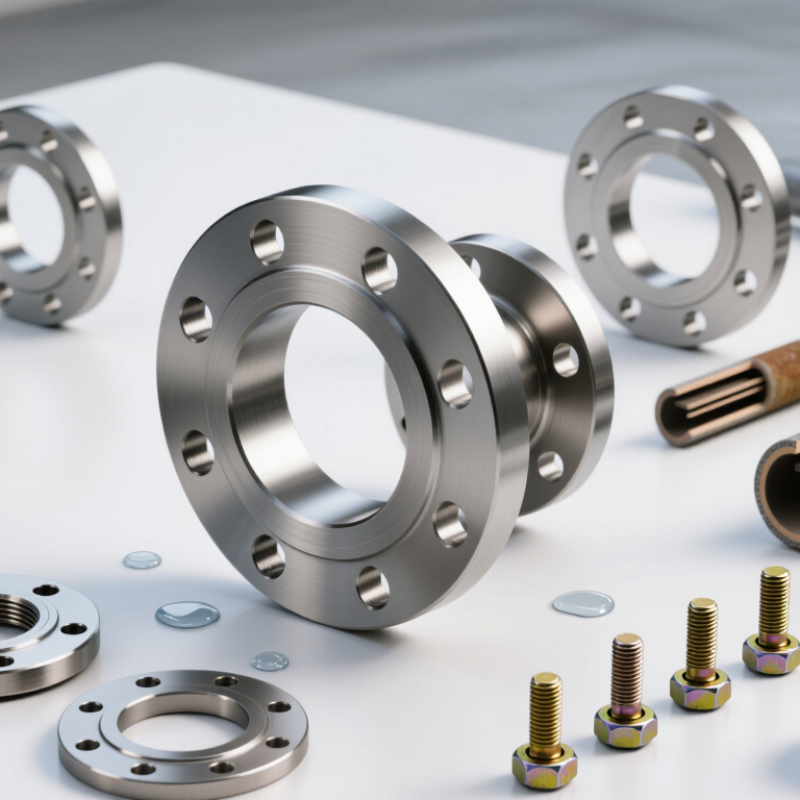
316L stainless steel flanges create a removable, pressure-rated joint between pipes, valves, pumps, and equipment. They hold the gasket in position and allow inspection without cutting the line. The “L” grade reduces carbon content, improving weldability and lowering the risk of sensitization after welding. Molybdenum, usually around 2–3%, improves resistance to pitting in chloride environments. That matters in coastal plants, wastewater systems, food-processing rooms, pharmaceutical utilities, and chemical service lines.
The NACE IMPACT study estimated global corrosion costs at about US$2.5 trillion annually, equal to roughly 3.4% of global GDP. Correct material selection can reduce avoidable maintenance, but 316L is not a universal answer. Concentrated chlorides, stagnant seawater, high temperatures, and poor cleaning can still cause failure. ASME B16.5 dimensions help control flange size, pressure class, and bolt-hole alignment, while ASTM A182 covers common forged stainless flange requirements. Field experience shows that gasket choice and bolt tightening often matter as much as the alloy. This is easy to underestimate.
Tips: Match the flange face with the gasket. Check pressure, temperature, chloride level, and welding conditions. Inspect scratches near the sealing surface. Avoid mixing incompatible bolting materials without engineering review. A cheaper flange may become expensive after one shutdown. Needlessly oversized designs also waste space and labor.
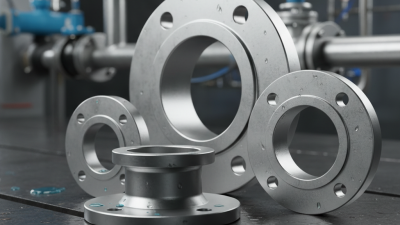
Choosing a 316L stainless steel flange starts with its pressure rating. Class 150 is not automatically suitable for every low-pressure line. Temperature, fluid type, gasket design, and bolt strength also affect the allowable working pressure.
Check the standard’s pressure-temperature tables, not only the label stamped on the flange. A flange exposed to hot chloride solution may perform differently from one used with cool water.
Dimensions must match the connected pipe precisely. Verify the nominal pipe size, outside diameter, bore, thickness, bolt-hole count, bolt-circle diameter, and facing type.
Even a small bore mismatch can disturb flow or prevent proper assembly. Raised-face and flat-face flanges should not be mixed carelessly.
Check gasket thickness and bolt length at the same time. It is an easy detail to miss.
Flange standards control these dimensions and drilling patterns. ASME B16.5 covers many pipe flanges and fittings, while EN 1092-1 and JIS B2220 use different systems. They are not automatically interchangeable.
Compare the full drawing before ordering. Confirm 316L chemical composition, heat number, markings, and inspection documents.
In practical checks, surface scratches around the sealing face deserve attention. Corrosion resistance is not unlimited. Chlorides, crevices, and poor cleaning can still cause damage.
A flange may look correct and remain unsuitable. Recheck the pressure class, dimensions, and standard against the actual service conditions.
How to Choose 316L Stainless Steel Flanges?
Evaluate Corrosion Resistance and Material Quality
When selecting 316L stainless steel flanges, begin with the actual service environment, not the catalog description. Chlorides, acids, moisture, and elevated temperatures can challenge passive chromium oxide protection. Molybdenum improves resistance to pitting, especially in seawater and chloride-bearing process lines. Yet 316L is not corrosion-proof. That distinction matters.
Ask for a material test certificate showing chemical composition, heat number, and applicable standards. Confirm the low carbon content, typically no more than 0.03%, because it helps reduce sensitization after welding. Traceability should follow each flange from melting through machining and inspection. Check the sealing face under good light. It should be even, clean, and free from deep tool marks. Small defects can become leakage paths.
Experience at installation sites shows that surface condition often decides real performance. Iron contamination from carbon-steel tools may create rust stains on otherwise suitable stainless steel. Proper pickling, passivation, and clean storage deserve the same attention as alloy selection. Inspect dimensions, pressure class, bolt-hole alignment, and wall transitions before installation. Do not rely on certificates alone. I have seen paperwork look complete while packaging allowed contamination. That uncomfortable gap deserves a corrective question: Was the flange tested, or merely documented? When service conditions are uncertain, consult a qualified materials engineer and compare corrosion data with the exact fluid, temperature, and cleaning chemicals.
| Evaluation Dimension | What to Check | Why It Matters | Practical Verification |
|---|---|---|---|
| Material designation | For forged flanges, check whether the specified grade is ASTM A182 F316L; the corresponding UNS designation is S31603. | Confirming the product form and grade helps ensure the flange is evaluated against the appropriate material requirements. | Compare the purchase specification, marking, and material test report. Do not assume that a generic “316L” description establishes compliance with a particular standard. |
| Low-carbon chemistry | ASTM A182 F316L specifies carbon at a maximum of 0.030% by mass. Exact requirements should be checked against the applicable edition of the standard. | The lower carbon limit helps reduce the risk of sensitization during welding, though it does not eliminate the need for suitable welding procedures. | Review the heat-specific material test report. Handheld X-ray fluorescence (XRF) generally does not reliably measure carbon; use a suitable laboratory method when carbon verification is required. |
| Chromium, nickel, and molybdenum | Typical ASTM A182 F316L composition ranges include chromium 16–18%, nickel 10–14%, and molybdenum 2–3% by mass. | These alloying elements contribute to stainless-steel passivity and improve resistance to several forms of corrosion compared with many lower-alloy stainless grades. | Check the certified chemistry for the actual heat. XRF-based positive material identification can help verify alloying elements such as chromium, nickel, and molybdenum, subject to instrument limits and procedure. |
| Chloride exposure | Assess chloride concentration, temperature, exposure duration, deposits, and whether stagnant or crevice conditions are present. | 316L can suffer pitting and crevice corrosion in chloride-bearing environments. Its suitability cannot be determined from the grade name alone. | Compare the service conditions with qualified corrosion data or an engineering assessment. For warm, concentrated, or stagnant chloride service, evaluate whether a more resistant alloy or a different design is needed. |
| Stress-corrosion cracking risk | Consider chlorides, tensile stress, temperature, fabrication history, and the overall operating environment. | Austenitic stainless steels, including 316L, can be susceptible to chloride stress-corrosion cracking under certain conditions. | Have a corrosion or materials specialist review the complete service conditions, including startup, shutdown, cleaning, and upset scenarios. |
| Flange standard and pressure class | Specify the applicable dimensional standard, nominal pipe size, facing, and pressure class. ASME B16.5 covers NPS 1/2 through NPS 24; ASME B16.47 covers larger flange sizes within its scope. | Pressure capacity depends on the flange standard, class, size, material group, temperature, and design conditions—not on the grade name alone. | Confirm dimensions and pressure-temperature ratings against the applicable standard and project design code. Check bolt pattern, bore, facing, and mating components. |
| Material traceability | Look for a heat or lot identification linking the flange to its material test report and required inspection records. | Traceability makes it possible to verify chemistry, mechanical properties, and specified manufacturing controls for the supplied item. | Match the marking on the flange to the report and purchase order. Investigate missing, inconsistent, or altered identification before installation. |
| Mechanical and manufacturing requirements | Check the required mechanical properties, heat treatment, testing, and acceptance criteria under the specified product standard and purchase requirements. | Correct chemistry alone does not establish that a flange meets all mechanical, manufacturing, or inspection requirements. | Review the material test report and applicable inspection documentation; request additional testing only where required by the specification or service risk. |
| Surface and dimensional condition | Inspect the sealing face, bore, bolt holes, dimensions, and visible surfaces for damage, defects, or contamination. | Surface damage or dimensional mismatch can affect gasket seating, assembly, and leak tightness. | Use the applicable dimensional standard and project acceptance criteria. Protect the flange face during transport and storage. |
| Welding and fabrication | Confirm that welding procedures and consumables are suitable for the specified 316L material and service. | Welding can affect the finished component and its corrosion performance; low-carbon material does not replace qualified procedures or appropriate post-weld cleaning. | Review approved welding documentation and fabrication records. Specify cleaning or passivation requirements when required by the project or service conditions. |
Selection note: Final suitability depends on the fluid composition, operating temperature and pressure, flange standard, fabrication, and applicable design code. Verify current standard editions and project-specific requirements before purchase or installation.
Choosing the right 316L stainless steel flange starts with the connection method, not appearance. The pipe system’s pressure, temperature, fluid chemistry, and maintenance schedule should guide the decision.
A weld neck flange suits high-pressure lines and repeated temperature cycling. Its tapered hub transfers stress gradually into the pipe. This detail matters near pumps, compressors, and vibrating equipment. A slip-on flange is easier to align and install. It may fit moderate-duty services, but its weld area needs careful inspection. A blind flange closes a pipeline for testing, isolation, or future expansion. For corrosive fluids, a lap joint can simplify frequent dismantling, although its loose backing flange needs proper alignment.
Connection choice also affects long-term reliability. Butt welding provides a strong, continuous joint when qualified procedures and clean preparation are used. Socket welding works on smaller lines, but its internal gap requires attention. Threaded connections avoid welding, yet they can create crevices and are usually less suitable for aggressive chemical service. Bolting requires a compatible gasket, correct bolt material, and controlled tightening. Uneven tightening can distort the flange face.
Standards such as ASME B16.5 or EN 1092-1 help confirm dimensions and pressure ratings. Still, a standard table cannot replace site conditions. I have seen technically correct selections fail after poor alignment or rushed surface cleaning. Recheck the drawing, gasket seating, and access for maintenance before fabrication. Engineering choices are rarely perfect. They should remain open to review.
Selecting 316L stainless steel flanges requires more than checking the material label.
ASTM A182/A182M defines requirements for forged stainless steel flange materials, while ASME B16.5 covers dimensions, pressure ratings, and tolerances. Ask the supplier for the material test certificate, heat number, chemical composition, tensile results, and hardness values. The heat number should appear on the flange or remain traceable through permanent marking.
Testing must match the service environment. Portable positive material identification can verify nickel, chromium, and molybdenum content before installation.
For chloride-rich or high-temperature applications, request corrosion testing, ultrasonic examination, or liquid penetrant inspection when relevant.
A certificate alone is not proof. It is only a starting point.
The 2023 International Stainless Steel Forum statistics reported global crude stainless steel production of approximately 58.4 million tonnes. Such volume increases the importance of controlled production and reliable documentation.
Require calibration records for testing equipment, inspection procedures, and clear acceptance criteria. ISO 9001 certification may show a quality system, but it does not guarantee every flange is suitable.
Check sampling methods and nonconformance records. Small details matter.
Some suppliers provide polished paperwork but weak traceability. I would also verify gasket-face protection, packaging, and marking after inspection.
A damaged sealing surface can fail long before the alloy does.