Why is Elevator Rope Critical for Safety and Efficiency in Vertical Transportation?
Elevator Rope plays a critical role in ensuring safety and efficiency in vertical transportation. As Robert Jensen, an industry expert with over two decades of experience, aptly stated, "The integrity of elevator rope is foundational to passenger safety." This emphasizes the importance of choosing the right materials and technologies for elevator systems.
Elevator ropes are subjected to immense stress and wear. Regular inspections and quality checks are essential. Failing to do so may lead to unforeseen accidents. For example, a worn-out rope can snap under pressure. Such events pose significant risks to passengers and service personnel.
Investing in advanced elevator rope technology is crucial. High-quality ropes enhance performance and longevity. However, many facilities still use outdated systems. This highlights a gap that needs addressing. The journey to better vertical transportation often begins with a critical assessment of elevator ropes. Each detail matters, from the type of material used to implementation of new safety standards.
The Role of Elevator Ropes in Safe Vertical Transportation
Elevator ropes play a vital role in vertical transportation. They are the unseen heroes that ensure safety and efficiency. These ropes are subject to significant stress during operation. They must bear the weight of the elevator, its passengers, and cargo. This load requires careful engineering and materials selection. However, not all ropes are created equal. Some may wear down or develop weaknesses over time.
The tension in the ropes is crucial. It influences the elevator's smoothness and speed. If a rope frays or breaks, the consequences can be severe. Regular inspections are essential. A small issue can escalate into a significant safety hazard. Understanding the condition of elevator ropes is not just important—it is necessary for safety.
Maintenance practices must be proactive. Ropes require proper lubrication and alignment. Failure to maintain these components can lead to malfunction. Operators should be vigilant in monitoring wear rates. In some cases, even minor damage can pose risks. Safety protocols must be reviewed frequently, with no room for complacency. The reliance on technology should not overshadow the need for manual checks. Elevators need well-maintained ropes for effective performance.
Types of Elevator Ropes and Their Specific Applications
Elevator ropes play a vital role in vertical transportation. Various types of ropes are used based on specific needs. Steel ropes are the most common. They offer strength and durability. These ropes can handle heavy loads. They are often used in commercial buildings.
In contrast, synthetic ropes provide flexibility and lighter weight. They are suitable for smaller elevators. Some buildings with less demand for heavy loads prefer these ropes. Efficiency is crucial here. Synthetic ropes reduce the overall load on the system. They may not offer the same durability as steel, though.
The choice of rope affects maintenance needs. Steel ropes require regular inspections. They wear down over time. Synthetic ropes might need replacing sooner but can be easier to handle. A mix of performance and safety should always be the focus. Finding the right balance is essential for optimal operation.
Why is Elevator Rope Critical for Safety and Efficiency in Vertical Transportation?
| Type of Elevator Rope |
Material |
Typical Applications |
Load Capacity (kg) |
Safety Features |
| Wire Rope |
Steel |
Freight Elevators, High-Rise Buildings |
5000 |
High tensile strength, corrosion resistance |
| Synthetic Rope |
Nylon, Polyester |
Specialty Elevators, Scenic Elevators |
2000 |
Lightweight, flexible, resistant to UV |
| Flat Belt |
Polyester |
Dumbwaiters, Small Elevators |
500 |
Reduced noise, smooth operation |
| Braided Rope |
Composite Materials |
Home Elevators, Lightweight Systems |
1000 |
Flexibility, easy handling |
Factors Affecting the Performance and Lifespan of Elevator Ropes
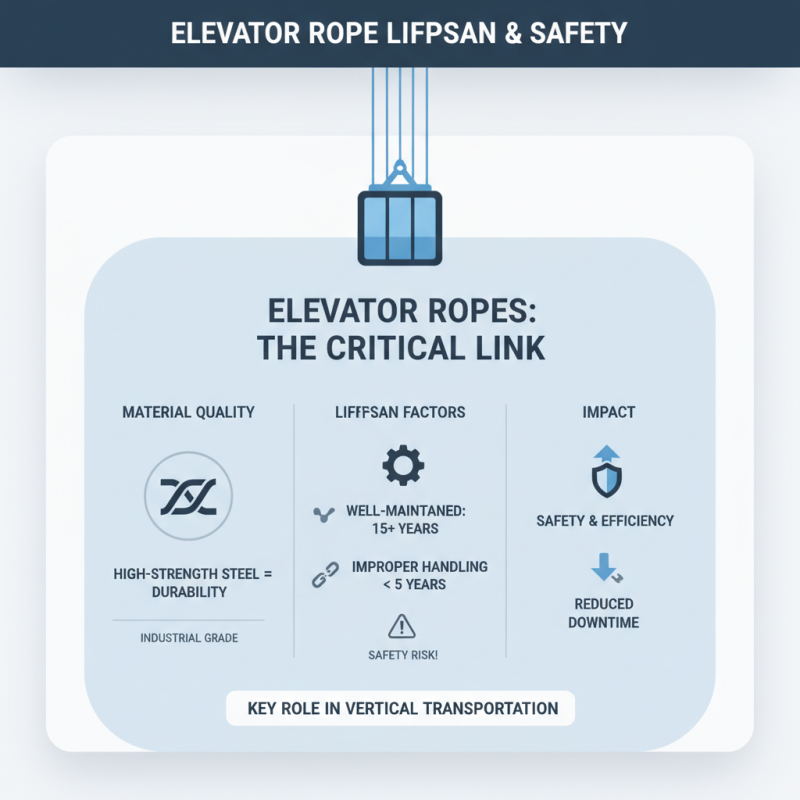
Elevator ropes play a crucial role in vertical transportation. Their performance influences the overall safety and efficiency of elevators. Several factors affect the lifespan of these ropes. Material quality is paramount. Using high-strength steel can enhance durability. Reports indicate that well-maintained ropes can last over 15 years. However, improper handling can reduce this lifespan significantly.
Environmental conditions also impact rope performance. Humidity, temperature fluctuations, and exposure to chemicals can lead to wear and tear. Studies show that moist environments can cause corrosion, weakening the ropes. Load variations are another concern. An elevator consistently carrying heavy loads may experience a faster depletion of rope quality. It is not uncommon for user negligence, such as overload, to lead to premature failures.
Regular inspections are essential. Many facilities overlook this critical maintenance step. A lack of routine checks can hide potential issues. This oversight could result in safety hazards. In reality, a rope that looks fine on the surface may have underlying damage. Investing in proper monitoring systems may seem costly, but it is essential for long-term safety and efficiency.
Maintenance Practices to Ensure Elevator Rope Safety and Efficiency
Elevator ropes are vital for safety and efficiency.
Regular maintenance practices help ensure their longevity. Inspecting ropes should happen often.
Look for signs of wear, fraying, or rust. These are red flags.
Timely maintenance avoids larger issues later.
Do not overlook lubrication.
Keeping ropes adequately lubricated prevents friction damage.
This simple step can extend their life. However, be cautious.
Too much lubricant can attract dirt. Finding the right balance is key.
During inspections, check the entire system.
Pay attention to the pulleys and the sheaves.
Misalignment can lead to premature wear. Keep an eye on the entire assembly.
Reflect on your current maintenance schedule.
Are you adhering to it? Rethink your strategies if you notice inconsistencies.
Technological Innovations in Elevator Rope Design and Materials
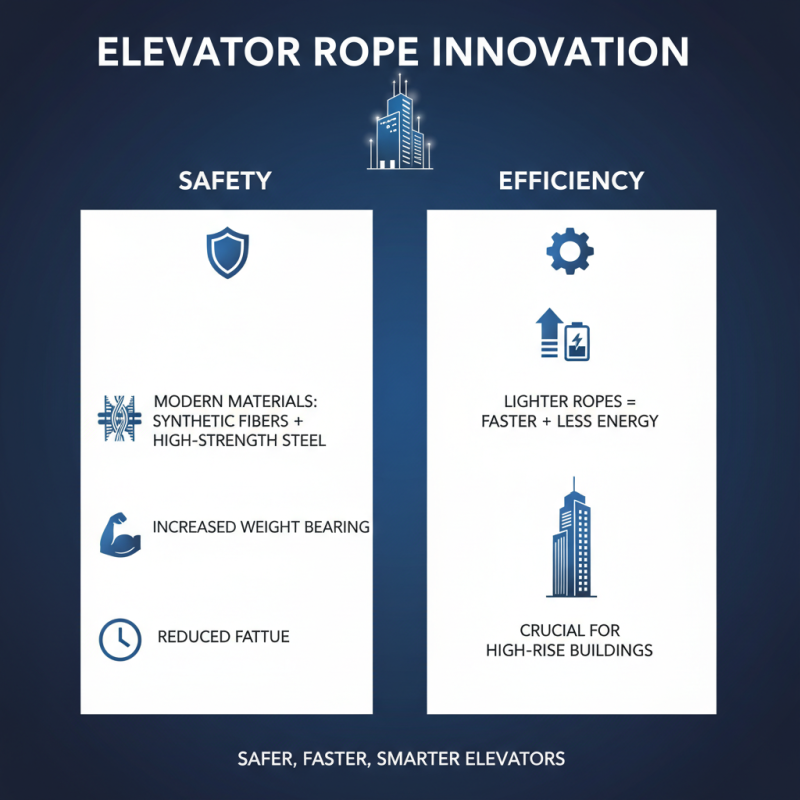
The innovation in elevator rope design is immensely important for safety and efficiency. Modern materials, such as synthetic fibers and high-strength steel, enhance performance. These materials can bear more weight while reducing fatigue. Lighter ropes allow elevators to move faster with less energy. This has been crucial for high-rise buildings where efficiency is essential.
Recent advancements have introduced coatings that improve durability. These coatings protect against wear and environmental factors. They help reduce maintenance costs over time. However, reliance on new materials can pose risks if not tested thoroughly. Some innovations may still prove inadequate under stress. Hence, there is a constant need for improvement.
Ropes that corrode can lead to disastrous failures. Innovation should focus not just on strength but also on reliability. Testing protocols must keep pace with advancements. While new materials are exciting, the industry must remain cautious. Every change should prioritize passenger safety above all else. Balancing innovation with old-school reliability is key for the future.