Why Choose Hoist Steel Wire Rope?
Why Choose Hoist Steel Wire Rope?
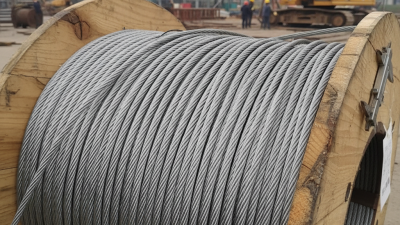
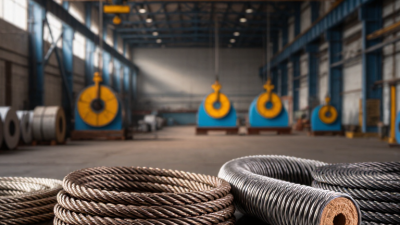
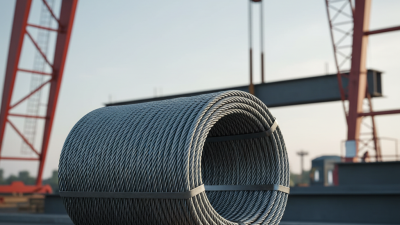
Hoist Steel Wire Rope carries loads through repeated lifting cycles, tight bends, and changing tensions. Its construction affects flexibility, resistance to wear, and service life. The right choice depends on more than breaking strength. Consider the hoist design, rope diameter, drum grooves, sheave dimensions, operating speed, and expected duty cycle. A rope that fits poorly can wear unevenly, even when its rated capacity appears adequate.
Wire-rope researcher Klaus Feyrer’s published work on rope tension and endurance supports a practical takeaway: “Rope reliability depends on construction, loading, and inspection working together.” This is a paraphrase, not a verbatim quotation. It highlights a point that specifications alone can miss. At the worksite, technicians should watch for broken wires, corrosion, flattening, and changes in rope diameter, following the equipment maker’s inspection guidance. Small defects matter. So does recordkeeping.
A suitable rope can help a hoist run smoothly and predictably. But no rope is maintenance-free, and selection is never a substitute for inspection. Details still get overlooked. That is worth admitting. This guide explains how rope construction, application needs, and upkeep shape a sound purchasing decision, so buyers can ask better questions before a load leaves the ground.
Hoist Steel Wire Rope: Construction, Strands, and 6×19/6×36 Classes
Why Choose Hoist Steel Wire Rope?
Hoist Steel Wire Rope: Construction, Strands, and 6×19/6×36 Classes
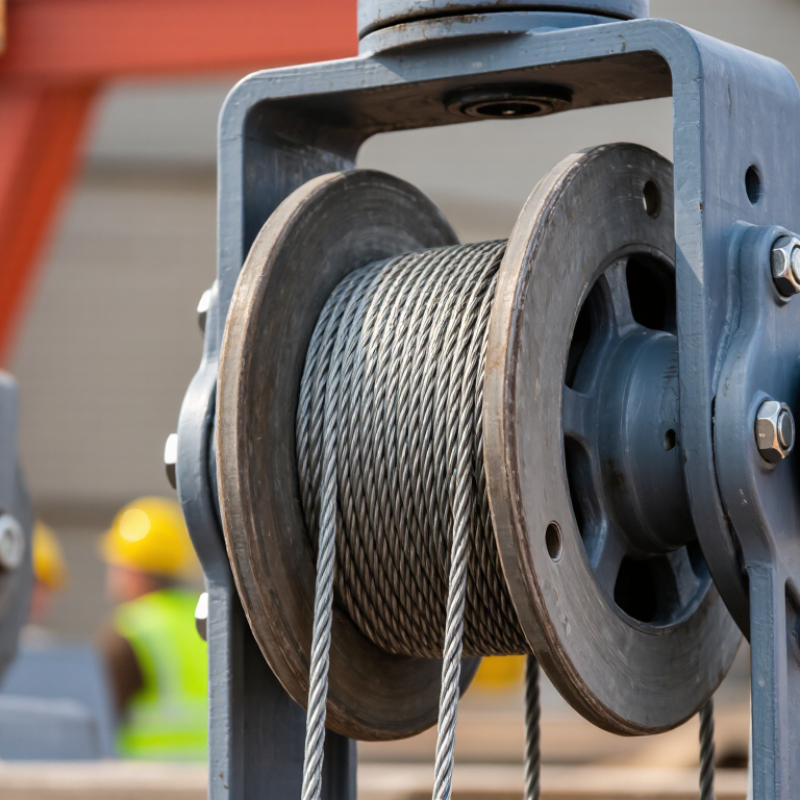
A hoist rope is built from individual wires twisted into strands, then laid around a core. The core supports the strands and helps maintain the rope’s shape under load. Wire Rope Technical Board guidance explains that classifications describe the number of strands and the approximate wires per strand. Thus, 6×19 denotes six strands with about 19 wires each; 6×36 denotes six with about 36. Those figures describe the strand construction, not the rope’s total wire count, which also depends on its core and exact design. Small difference, practical effect.
In general, 6×19 constructions use fewer, thicker wires and tend to resist abrasion well. 6×36 constructions use more, finer wires and are often selected when bending flexibility matters. Neither class is automatically “stronger” or safer; diameter, core, grade, lay, sheave size, and duty cycle all affect performance. ISO 4309:2017 sets out inspection and discard guidance for crane wire ropes, including checks for broken wires, corrosion, and diameter reduction. A classification alone cannot replace those checks. On a working hoist, inspect the sections that repeatedly pass over sheaves, where wear can be easy to miss. I would not choose by strand label alone. Manufacturers’ specifications and the hoist’s actual operating conditions must guide selection.
Wire-Rope Grades: ISO 2408 Strength Levels from 1,570 to 2,160 N/mm²
Choosing hoist steel wire rope starts with its wire-rope grade. ISO 2408:2017 specifies nominal tensile-strength grades of 1,570, 1,770, 1,960, and 2,160 N/mm². These figures describe the wire’s tensile strength, not the rope’s complete working-load limit. That distinction matters.
A higher grade can help achieve a required breaking force with a given rope design, but it does not make every rope interchangeable. Diameter, strand construction, core, and end connections also affect performance. For a hoist, match the rope specification to the equipment manufacturer’s requirements and the actual duty cycle. A compact rope running over a small sheave may experience bending fatigue even when its wire grade is high. Small details count.
ISO 4309:2017 provides inspection and discard guidance for ropes, including checks for broken wires and diameter reduction. Use that guidance alongside the rope’s documented construction and service history. Grade selection alone is an incomplete decision; even a sound specification can be undermined by poor reeving or neglected inspection. It is tempting to choose the highest number, but that can be the wrong trade-off when flexibility, sheave compatibility, and wear matter more.
Why Choose Hoist Steel Wire Rope? - Wire-Rope Grades: ISO 2408 Strength Levels from 1,570 to 2,160 N/mm²
| Wire-rope grade |
Nominal wire tensile strength |
Increase vs. 1,570 N/mm² |
What the grade indicates |
| 1,570 |
1,570 N/mm² |
Baseline |
The nominal tensile-strength grade of the rope wires. |
| 1,770 |
1,770 N/mm² |
About 12.7% |
A higher nominal wire-strength level than grade 1,570. |
| 1,960 |
1,960 N/mm² |
About 24.8% |
A higher nominal wire-strength level than grades 1,570 and 1,770. |
| 2,160 |
2,160 N/mm² |
About 37.6% |
The highest nominal wire-strength level shown in this comparison. |
Note: The percentage increases are calculated from the nominal grade values relative to 1,570 N/mm² and rounded to one decimal place. Wire-rope grade describes the nominal tensile strength of the wires; it is not the rope’s minimum breaking force. Rope breaking force depends on factors including rope diameter and construction. Select a hoist rope according to the equipment manufacturer’s specifications and applicable standards.
Choosing Rope for Hoist Duty: Core Type, Sheave Diameter, and D/d Ratio
Why Choose Hoist Steel Wire Rope?
Choosing Rope for Hoist Duty: Core Type, Sheave Diameter, and D/d Ratio
A hoist rope works through repeated bends, not just straight-line tension. The core matters: an independent wire-rope core generally supports strands better under crushing pressure, while a fibre core offers flexibility but may compress more. The Wire Rope Technical Board’s Wire Rope Users Manual explains how rope construction and sheave geometry affect bending-fatigue performance. Match the core to the drum, reeving pattern, load cycles, and operating environment. A choice that works on paper may feel wrong when the rope repeatedly rubs a tight groove.
Check the sheave pitch diameter, not its outside flange diameter. D/d means sheave pitch diameter divided by nominal rope diameter; a 400 mm pitch diameter with a 20 mm rope gives 20:1. That is an example, not a universal target. A lower ratio bends wires more sharply and can shorten fatigue life. The manual discusses D/d as a key selection factor, while ISO 4309:2017 provides inspection and discard guidance, including broken-wire and diameter-reduction checks. Neither replaces the rope maker’s construction-specific limits. Measure the groove, confirm the actual rope diameter, and review the hoist duty cycle. Small details matter. I would still recheck the groove after installation; that step is easy to underestimate.
Load Capacity and Safety: Matching Rope Specifications to Hoist Requirements
Why Choose Hoist Steel Wire Rope?
Load Capacity and Safety: Matching Rope Specifications to Hoist Requirements
A hoist rope is not selected by diameter alone. Its safe working capacity depends on construction, grade, core, reeving, drum and sheave sizes, and service conditions. Start with the hoist’s rated configuration, then check the rope’s minimum breaking force and required design factor against the applicable standard. Do not simply divide the hook load by the number of rope parts; sheave friction and acceleration affect rope tension. Small details matter.
For example, a 2-tonne load does not automatically call for a rope rated at 1 tonne per part. Account for the hook block, attachments, duty cycle, and any side pull. Check the rope’s diameter and inspect for corrosion, flattening, birdcaging, or broken wires. OSHA 29 CFR 1910.179(h)(2)(iii) gives replacement criteria for running ropes, including six randomly distributed broken wires in one lay or three in one strand within one lay. This is a U.S. crane rule, not a universal substitute for the hoist manual or local requirements.
A practical mismatch can begin at the sheave: an otherwise strong rope may wear early if it bends too sharply. Match rope construction and diameter to the actual sheave and drum ratios, then record baseline measurements. That shortcut fails. Capacity figures are useful only when the installation, inspection, and lifting pattern fit their assumptions.
ISO 4309 Inspection: Broken-Wire Counts Over 6d and 30d Rope Lengths
Why Choose Hoist Steel Wire Rope?
ISO 4309 Inspection: Broken-Wire Counts Over 6d and 30d Rope Lengths
A hoist rope’s condition is not judged by appearance alone. ISO 4309:2017, the international standard for wire-rope care, inspection, and discard, uses broken-wire counts over lengths of 6d and 30d. Here, d is the rope’s nominal diameter. Small details matter.
For a 20 mm rope, the inspection lengths are 120 mm and 600 mm. An inspector counts visible broken wires across each length, then checks the result against the applicable ISO 4309 table. Limits vary with rope construction and classification; there is no single safe count for every hoist rope. A short section may look clean while a longer inspection length reveals concentrated damage.
Good records help. Note the rope location, count, date, and changes in diameter or surface condition. A bright lamp and a clean rope make broken ends easier to spot, especially near a termination or sheave. But a tidy log is not enough. Corrosion, wear, deformation, and local damage also matter under ISO 4309. Choose rope suited to the hoist’s duty, and have a competent person assess uncertain findings before continued service.
Why Choose Hoist Steel Wire Rope? Regular inspection helps identify wire breaks before they compromise safe operation. This illustrative chart shows example counts found within inspection lengths of 6d and 30d, where d is the nominal rope diameter. These values are examples, not ISO 4309 discard limits; applicable limits depend on rope construction and other inspection criteria.