How to Choose the Best 316l Stainless Steel Pipe for Your Needs?
Choosing the right 316l Stainless Steel Pipe can be challenging. This material is known for its durability and resistance to corrosion. According to industry expert Dr. John Smith, "Selecting the appropriate 316l Stainless Steel Pipe is crucial for ensuring longevity and performance in various applications."
When seeking a 316l Stainless Steel Pipe, consider factors such as size, thickness, and intended use. Not all pipes are created equal, and each application may require a different specification. It’s common to overlook vital details during selection, which can lead to diminished performance over time.
The reputation of the supplier also plays a significant role. A trusted supplier will provide quality assurance and certification, ensuring the pipe meets industry standards. Often, it's easy to get distracted by price rather than quality. Focusing on reliability might be a smarter choice. When in doubt, consult with an expert before making a purchase. Ensuring you have the best 316l Stainless Steel Pipe can save time and resources in the long run.
Understanding the Characteristics of 316L Stainless Steel Pipe
When selecting a 316L stainless steel pipe, it's essential to understand its characteristics. 316L stainless steel is known for its excellent corrosion resistance, especially in chloride environments. This makes it suitable for maritime and chemical applications. Its mechanical properties also contribute to its durability and strength, which are critical for high-pressure situations.
Tips: Always check the thickness and diameter of the pipe. This will affect its strength and load-bearing capacity. Additionally, consider the pipe's finish, as a smooth surface can enhance corrosion resistance.
Another important aspect is the temperature resistance of 316L stainless steel. It performs well in higher temperatures compared to other stainless steels. However, one should be cautious of its limitations in specific environments. While it is a versatile choice, it may not be the best option for every application.
Tips: Review the operating conditions before making a decision. Factors such as temperature and exposure to chemicals can impact the performance of the pipe. Consult with experts if unsure about the optimal choice.
Identifying Your Specific Application Requirements
When selecting a 316L stainless steel pipe, understanding your specific application requirements is crucial. This type of stainless steel is known for its superior corrosion resistance, especially in chloride environments. According to industry reports, around 90% of users in marine or chemical processing sectors prioritize this characteristic. If your project involves exposure to harsh chemicals or saltwater, 316L may be the ideal choice.
Consider the size and thickness of the pipe. Different applications require varying dimensions. For example, a chemical plant may need thicker walls for pressure vessels. The ASTM A312 standard outlines specifications that can guide your selection. Not all projects have the same needs, so assess the pressure ratings and dimensions carefully.
It’s important to note that not all manufacturers adhere to the same quality standards. This can lead to variability in performance. Investigate certifications, such as ISO 9001, which indicate a commitment to quality practices. Ensure that your supplier has a robust process in place. In some cases, cost-saving measures can lead to subpar materials that might compromise safety.
How to Choose the Best 316l Stainless Steel Pipe for Your Needs?
| Application |
Diameter (inch) |
Wall Thickness (mm) |
Length (ft) |
Temperature Range (°F) |
Corrosion Resistance |
| Marine Applications |
1.5 |
2.0 |
20 |
-40 to 150 |
Excellent |
| Food Processing |
2.0 |
1.5 |
25 |
32 to 200 |
Very Good |
| Chemical Processing |
3.0 |
3.5 |
30 |
-20 to 300 |
Good |
| Oil and Gas |
4.0 |
5.0 |
40 |
-50 to 250 |
Fair |
| Pharmaceutical |
2.5 |
2.0 |
20 |
32 to 200 |
Excellent |
Evaluating Pipe Sizing and Dimensions
When evaluating pipe sizing and dimensions for 316L stainless steel pipes, precision is crucial. The right diameter contributes significantly to flow rates and pressure drop. For instance, the American Society of Mechanical Engineers (ASME) suggests that proper sizing can improve efficiency by up to 30%. This means that an adequate match between the application and pipe dimensions is essential.
Often, users mistakenly choose standard sizes without considering flow requirements. A 1-inch diameter pipe may work for some applications, but not all. Flow velocity is another critical factor. Excessive speed can lead to erosion and noise, impacting system integrity. The recommended flow velocity for stainless steel pipes typically ranges from 3 to 5 feet per second. Make sure to consult industry standards for precise calculations.
Dimensions should also consider wall thickness. For 316L stainless steel, varying thickness levels can handle different pressures and environmental conditions. Typically, a thicker wall adds durability but increases weight, affecting installation and support structures. Always assess the comprehensive requirements of your project to avoid costly modifications later.
Assessing the Importance of Certifications and Quality Standards
When selecting a 316L stainless steel pipe, certifications and quality standards should be a primary focus. Industry data from the Steel Pipe Institute indicates that over 70% of structural failures are linked to inadequate material standards. This highlights how crucial it is to prioritize pipes that meet specific certifications like ASTM A312 or ASME B36.19. These standards ensure the pipes can withstand harsh environments.
Quality assurance in manufacturing is also essential. ISO 9001 certification ensures consistent quality and reliability in production processes. A report by the International Organization for Standardization mentioned that companies with this certification see a 20% reduction in defects. However, many suppliers might not fully comply with these standards. It is vital to scrutinize documentation and ask for third-party verification.
Not all pipes labeled as 316L are created equal. Inconsistencies in production can lead to variations in corrosion resistance and tensile strength. The American Society for Testing and Materials (ASTM) provides guidelines that can help in evaluation. In recent studies, discrepancies between lab results and field performance were noted, stressing the need for thorough inspections before procurement.
Comparison of 316L Stainless Steel Pipe Certifications and Quality Standards
Comparing Cost and Supplier Options for 316L Stainless Steel Pipe
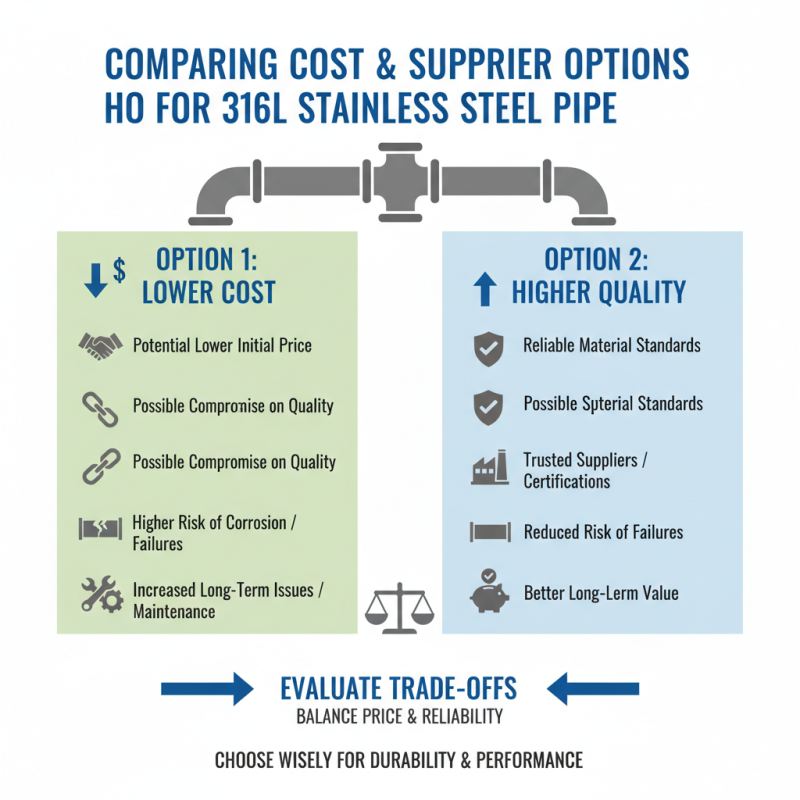
When selecting a 316L stainless steel pipe, cost and supplier options are crucial. Prices can vary significantly among suppliers. Some may offer lower costs but compromise on quality. Others might emphasize quality but at a higher price point. It's essential to evaluate these trade-offs. Cheap pipes may lead to long-term issues, like corrosion or structural failures.
Consider buying from reputable suppliers. Check their history and customer reviews. Reliable suppliers often provide thorough product specifications. They should be transparent about their manufacturing processes. Communication is vital. If you find it hard to get information, that could be a red flag. Look for suppliers that offer warranties on their products. This can indicate confidence in the quality.
Not all suppliers provide the same level of service. Some may have limited inventory, which can delay your project. It’s essential to ask about lead times and delivery options. A supplier with a strong network can often deliver faster. However, that may come at a higher price. Balance your immediate needs with long-term value. Price is only part of the equation when choosing the right 316L stainless steel pipe.