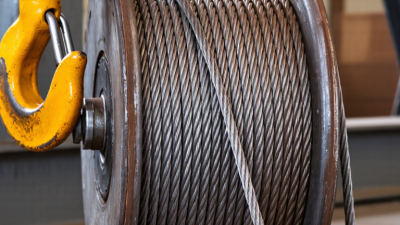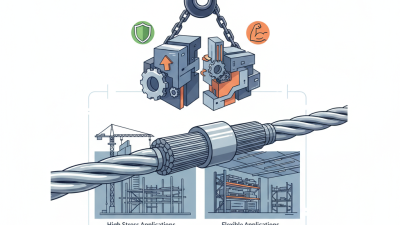
Choosing a China-based Hoisting Wire Rope supplier requires more than comparing catalog prices. The rope may lift molds, bridge components, cranes, or heavy machinery in harsh working environments. A poor decision can create rapid wear, broken strands, unplanned downtime, and serious safety concerns. This guide explains how to assess manufacturers through evidence, not attractive claims. It focuses on production experience, engineering capability, quality control, and after-sales support. Details matter.
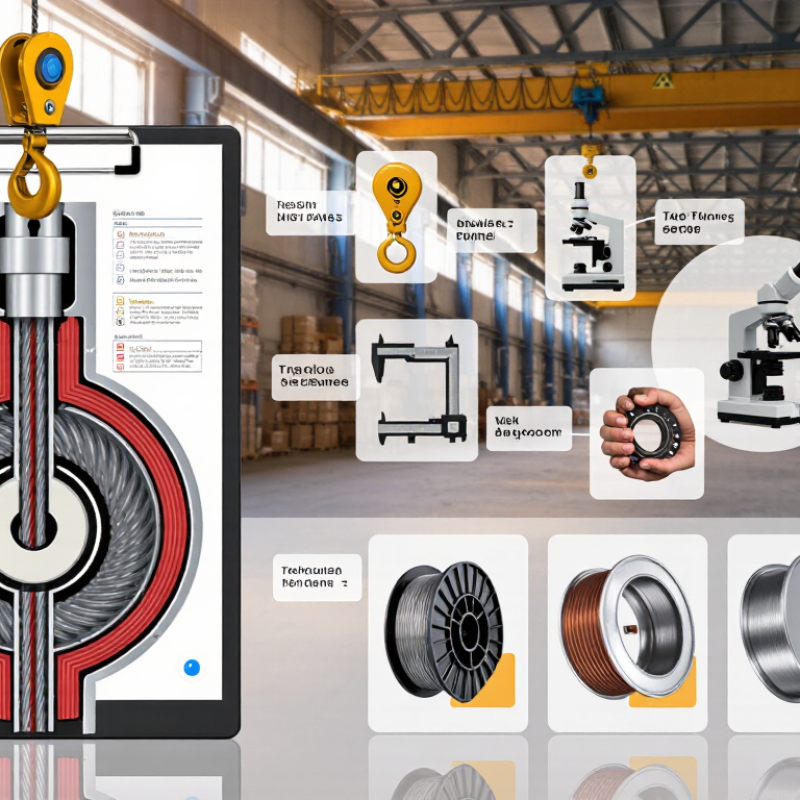
Reliable suppliers should clearly state rope construction, diameter tolerance, tensile grade, lay direction, core type, and coating. They should provide material records, inspection reports, and traceable batch information. Ask how wire rod is tested before stranding. Ask how breaking force, fatigue resistance, and lubrication are checked. Factory experience is easier to trust when visitors can see stranding machines, measuring tools, and controlled storage areas. Photographs help, but verifiable documents help more. A supplier that answers slowly or vaguely deserves careful review. Not every polished website reflects stable manufacturing performance.
The right choice also depends on the application, reeving system, fleet size, environment, and maintenance routine. A rope used near salt air may need different protection from one used indoors. Purchasers should compare complete specifications, sample testing, delivery consistency, packaging, and technical communication. Cost still matters, but the cheapest offer may become expensive after premature replacement. This article does not pretend to remove every uncertainty. Supplier audits can be incomplete. Even experienced buyers may overlook installation conditions or operator habits. Use the following outline as a practical screening tool, then confirm critical decisions with qualified lifting professionals and applicable standards. That balance supports safer purchasing and more dependable Hoisting Wire Rope performance.
China Top Hoisting Wire Rope Suppliers: How to Choose?
Hoisting wire rope selection starts with load movement, not price. Six-strand 6×19 rope offers strength and abrasion resistance. It suits cranes, winches, and general lifting. The 6×37 construction bends more easily around small sheaves. It fits frequent cycling and material-handling equipment. Rotation-resistant rope reduces twisting during tall lifts. However, it needs careful installation and controlled handling. Galvanized rope performs better in humid yards and outdoor construction. Stainless steel rope serves cleaner, corrosive environments, but costs more.
Recent market analyses from Grand View Research and MarketsandMarkets identify construction, mining, marine lifting, and oil-field equipment as major demand sectors. Grand View Research estimates the global steel wire rope market exceeded 8 billion dollars in 2023. These figures describe broad markets, not every hoisting application. That distinction matters. A supplier should provide tensile-grade data, measured diameter, lay direction, lubrication details, and batch traceability. Test certificates should match the delivered coil, not a generic file.
Look closely at the sheave.
ISO 4309:2017 provides inspection and discard guidance for crane ropes. OSHA guidance also emphasizes frequent inspections, especially where wear, crushing, corrosion, or broken wires may develop. Ask Chinese suppliers for fatigue-test results, dimensional tolerances, and independent inspection records. I would also check socket compatibility and minimum breaking force calculations. Many purchasing guides oversimplify safety factors. Real lifting conditions are rarely perfect. Temperature, shock loading, poor reeving, and uneven fleet angles can shorten service life. A lower-cost rope may become expensive after early replacement.
Types of hoisting wire rope differ in flexibility, rotation resistance, crushing resistance, and fatigue performance. The chart compares approximate minimum breaking forces for common rope constructions at 20 mm diameter, 1770 MPa nominal tensile strength, and an independent wire rope core (IWRC).
Values are engineering estimates calculated from typical metallic-area coefficients and are intended for initial comparison only. Final selection should verify the rope standard, actual diameter, lay direction, safety factor, sheave compatibility, working environment, and the supplier’s certified product data.
| Rope construction | Typical industrial applications | Main selection advantage |
|---|---|---|
| 6×19 IWRC | General cranes, hoists, winches, and material handling | Good balance of abrasion resistance and flexibility |
| 6×36 IWRC | Overhead cranes, lifting blocks, and repeated bending service | Higher flexibility and better bending-fatigue performance |
| 8×19 IWRC | Passenger and freight elevators, compact lifting systems | Smooth operation over sheaves and relatively high flexibility |
| Rotation-resistant rope | Tower cranes, deep lifting, and single-line lifting operations | Reduced load-induced spinning and better control of suspended loads |
| Compacted-strand rope | Heavy-duty cranes, mining hoists, and high-load lifting equipment | Higher metallic area, improved crushing resistance, and increased strength-to-diameter ratio |
Choosing a Chinese hoisting wire rope supplier requires more than comparing prices. The key question is whether the supplier can meet the rope’s working conditions. Check applicable GB/T, ISO, EN, or ASTM requirements before reviewing quotations. Confirm rope construction, nominal diameter, tensile grade, lay direction, breaking force, and coating type. These details affect lifting safety and service life.
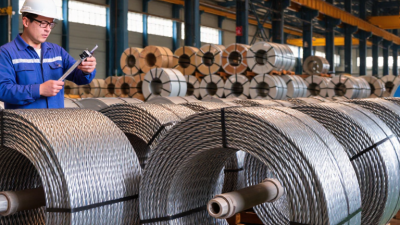
Ask for recent batch test reports, not only general certificates. Reports should identify the heat number, production date, measured diameter, breaking load, and inspection method. A reliable supplier should provide material traceability from steel wire to finished reel. ISO 9001 certification can support quality control, but it does not replace product testing. Inspect the production site when possible. Look for calibrated machines, protected storage, clean lubrication areas, and clear rejection procedures.
Request a sample before placing a large order. Measure the diameter at several positions. Check surface finish, lay length, lubrication, and visible broken wires. Packaging also matters; damaged reels may expose rope to moisture during transport. Ask how the supplier handles complaints and replacement decisions. Fast replies are useful, but technical answers matter more. A polished certificate is not enough. No evaluation is perfect. Even experienced buyers can overlook fatigue performance or incorrect end connections. Record every requirement in the purchase specification, then compare evidence rather than promises.
When choosing a China-based hoisting wire rope supplier, compare quality through measurable evidence, not attractive catalog images. Request material certificates, breaking-force results, diameter tolerances, and batch traceability. A reliable supplier should identify the steel grade, rope construction, core type, lay direction, and lubrication method. These details affect fatigue resistance, drum performance, and service life.
Ask for recent inspection reports from recognized laboratories. Check whether the test sample matches your required rope diameter and construction. Certifications should be relevant, current, and issued for the correct factory scope. ISO 9001 can indicate controlled processes, but it does not prove every rope meets your technical requirements. Product compliance with applicable standards, such as EN or ASTM specifications, needs separate verification. Ask for evidence. Certificates alone are not enough.
Capacity requires more than a large production claim. Review annual output, available stranding equipment, heat-treatment control, warehouse conditions, and normal lead times. Confirm whether the supplier can repeat your specification across several batches. A useful audit includes checking production records, sample markings, packing protection, and rejected-product handling. Photos are not enough. A small trial order can expose inconsistent diameter, weak documentation, or delayed communication before a major contract. Even experienced buyers can overvalue low pricing; that choice may create higher costs through installation delays, premature replacement, or difficult claims. Supplier evaluation should remain practical, documented, and open to revision.
Practical comparison framework for evaluating hoisting wire rope suppliers without relying on company or brand names.
| Evaluation Dimension | Recommended Benchmark | Evidence to Request | Suggested Weight | Scoring Guide |
|---|---|---|---|---|
| Applicable Product Standard | The rope should be manufactured and tested against the standard specified for the intended lifting application, such as ISO, EN, ASTM, API, or an applicable national standard. | Product datasheet, standard reference, design designation, rope construction, grade, lay direction, and breaking-force requirements. | 15% | 5 = Fully documented 3 = Partially documented 1 = No clear reference |
| Material and Wire Quality | Steel grade, tensile-strength class, coating type, lubrication, and corrosion protection should match the operating environment and required duty cycle. | Raw-material certificates, chemical composition records, tensile-test results, coating details, and lubricant specification. | 15% | 5 = Complete traceable records 3 = Basic records 1 = Verbal claims only |
| Breaking Force and Performance Testing | Each production lot should have documented test results for minimum breaking force or other performance values required by the purchase specification. | Batch test certificate, calibrated testing-machine records, test date, sample identification, and acceptance criteria. | 15% | 5 = Lot-specific results 3 = Sample results only 1 = No test evidence |
| Dimensional and Visual Consistency | Diameter, lay, rope length, end termination, surface condition, and packaging should remain within the agreed purchase tolerances. | Inspection plan, dimensional inspection report, photographs before shipment, and acceptance-tolerance sheet. | 8% | 5 = Documented control plan 3 = Routine inspection 1 = No defined tolerance |
| Production Capacity | Capacity should be assessed against required diameter range, construction, rope length, monthly demand, and peak-order requirements rather than a general factory claim. | Available machine range, standard lead time, maximum coil or reel length, monthly allocation, and contingency plan. | 12% | 5 = Capacity matches forecast 3 = Capacity needs planning 1 = Capacity unclear |
| Quality Management Certification | A valid ISO 9001 certificate is useful only when its scope covers the relevant manufacturing and inspection activities. | Certificate number, issuing body, validity period, certified scope, site address, and accreditation status of the certification body. | 10% | 5 = Valid and scope-matched 3 = Valid but limited scope 1 = Unverified |
| Application-Specific Approvals | For specialized uses, approvals or conformity documents should correspond to the actual application, such as offshore, drilling, mining, crane, or elevator service. | Applicable approval certificate, product scope, inspection requirements, renewal date, and project references that can be independently checked. | 8% | 5 = Application-specific approval 3 = General documentation 1 = Irrelevant or missing |
| Traceability and Nonconformity Control | Every shipment should be traceable from finished rope to production batch, raw material, inspection result, and packing record. | Lot number format, QR or barcode system, corrective-action procedure, complaint records, and product-recall process. | 8% | 5 = Full end-to-end traceability 3 = Partial traceability 1 = No formal system |
| Delivery and Export Capability | The supplier should demonstrate stable lead-time performance, export-document capability, suitable packaging, and protection against corrosion or handling damage. | Typical and peak lead times, packing specification, shipping documents, loading photographs, and delivery-performance records. | 5% | 5 = Consistent documented performance 3 = Acceptable with conditions 1 = Unreliable |
| Technical Support and Safe-Use Information | The supplier should provide installation, reeving, lubrication, inspection, storage, retirement, and safe working-load guidance suitable for the selected rope. | Technical manual, inspection guidance, recommended service conditions, training availability, and response time for engineering questions. | 4% | 5 = Detailed technical support 3 = Standard guidance 1 = Limited support |
Applicable standard, lot-specific breaking-force results, material traceability, and application-specific approvals.
Capacity matched to forecast, documented lead time, export packaging, and corrective-action responsiveness.
Approve samples and documentation before mass production, and define acceptance criteria in the purchase contract.
China Top Hoisting Wire Rope Suppliers: How to Choose?
Before selecting a hoisting wire rope manufacturer, ask practical questions. Can the supplier provide material traceability for every rope batch? Does each rope include diameter, construction, grade, lay direction, breaking force, and test records? ISO 4309 explains inspection and discard criteria, including broken wires, corrosion, deformation, and diameter loss. A serious manufacturer should discuss these details clearly, not only quote a low price.
Ask how the rope performs under repeated bending, shock loading, heat, and outdoor moisture. Request independent testing or calibrated factory reports. The International Labour Organization estimates nearly three million workers die annually from work-related causes. This figure is not rope-specific, but it shows why undocumented lifting products deserve careful review. Check whether the manufacturer offers installation guidance, lubrication advice, inspection training, and replacement recommendations. In practice, a rope can look acceptable while internal corrosion develops around the core. Visual checks alone may mislead.
Tips: Compare breaking force with your real working load, not only the catalog number. Confirm the safety factor required by your equipment standard. Ask for sample certificates and inspect the rope surface, reel packing, and end termination before shipment. Also, clarify complaint handling and response time. A supplier may promise “premium quality,” yet vague answers remain a warning sign. I would also request a small trial order. It costs more time, but it can reveal inconsistent diameter or poor lubrication before a larger purchase.
Choosing a hoisting wire rope supplier requires more than comparing catalog prices. Request a detailed quotation with rope diameter, construction, grade, length, coating, packaging, and testing costs. Ask whether the price includes export packing and delivery to your port. A low quote may omit important items. Ask for evidence.
Compare at least three written offers using the same technical requirements. Check production capacity, inspection procedures, and traceability records for each batch. Experienced suppliers should explain breaking force, bending performance, lubrication, and suitable operating conditions clearly.
Request recent test reports, sample photos, and a video inspection when practical. Details matter. Do not accept vague claims about “top quality.”
Confirm the delivery schedule in writing, including production time, inspection time, shipping preparation, and estimated transit time. Ask how delays are reported and documented. Review the warranty carefully. It should identify coverage, exclusions, claim deadlines, and the evidence required for a replacement.
After-sales support also deserves testing before payment. Send technical questions and measure response speed, clarity, and consistency. A reliable team should provide installation guidance, storage advice, and troubleshooting support after delivery.
In my experience, communication can look excellent before an order, then become slower afterward. That risk deserves attention. Keep records. Recheck every promise against the final contract and packing documents.