Leave Your Message


Choosing Crane Ropes in 2026 is not a catalog exercise. The right rope must match the crane, reeving system, sheave diameter, lifting duty, and working environment. A rope that performs well on a low-cycle indoor hoist may wear quickly on a dusty site with frequent starts and stops. Small details matter: wire grade, rope construction, core type, rotation resistance, and lubrication can all affect handling and service life.
For practical selection and inspection criteria, ISO 4309:2017 sets out guidance for the care, maintenance, inspection, and discard of crane wire ropes. The Wire Rope Technical Board’s Wire Rope Users Manual is another established technical reference for rope construction and application. In the United States, OSHA’s 29 CFR 1910.179 requires monthly inspections of running ropes on covered overhead and gantry cranes, with records maintained. These sources do not replace a competent person’s assessment. They help make decisions traceable.
Start with the actual lift plan, not just the rated capacity printed on a plate. Check load cycles, fleet angle, drum geometry, exposure to heat or corrosion, and the manufacturer’s rope recommendations. Ask suppliers for documented construction details and compatibility evidence. Then compare inspection findings with operating records. One weakness in many selection processes is overconfidence in a single specification. It happens. A technically suitable rope can still disappoint when installation, lubrication, or inspection is neglected. In 2026, choose for the whole service cycle—not merely the purchase price.
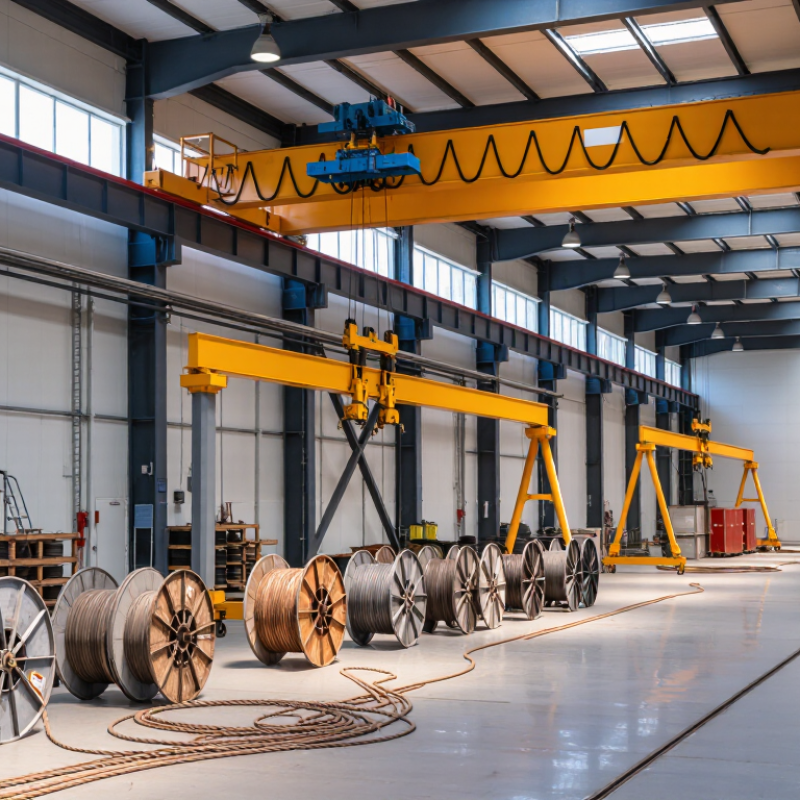
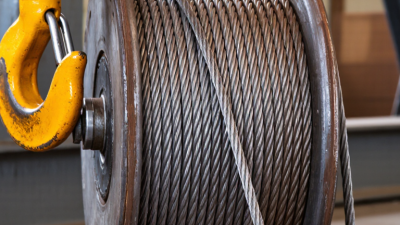
Crane rope choice begins with the lift, not the catalogue. Wire rope is common for hoists because its steel strands handle repeated bending and abrasion. Its construction matters: rotation-resistant designs can help control load twist, while different cores affect flexibility and crush resistance. A rope that looks heavier is not automatically safer. Details matter.
Match the rope to its operating conditions. Check the hoist’s reeving pattern, sheave and drum diameters, fleet angle, lift speed, and duty cycle. Small sheaves can accelerate fatigue; poor spooling can crush outer strands. In a wet or corrosive setting, consider the environment and the rope’s protective finish. Heat, grit, and frequent shock loading also change how quickly wear develops. Not always obvious.
Before selection, compare the rope’s rated capacity and construction with the crane manufacturer’s specifications and the actual load path. A qualified inspector can assess broken wires, corrosion, kinks, and diameter loss during service. Keep inspection records, and investigate unusual vibration or birdcaging rather than assuming it will settle down. I would still question a choice based only on price; operating details are easy to miss, especially when a crane handles several different lifts.
| Rope Type or Construction | Common Crane Applications | Relevant Characteristics | Operating Conditions to Consider | Selection Checks |
|---|---|---|---|---|
| Conventional 6-strand rope (for example, 6×19 or 6×36 family) | General-purpose hoisting and winch applications where the crane design calls for a conventional rope. | Six strands are laid around a core. The 6×19 family generally has fewer, larger wires per strand than the 6×36 family; wire count and rope design affect flexibility and resistance to wear. | Consider sheave and drum diameters, fleet angle, bending frequency, abrasion, and the rope’s exposure to dirt or corrosion. | Confirm the specified diameter, rope grade, core, lay, minimum breaking force, and compatibility with the crane’s reeving system. |
| Rotation-resistant rope | Applications with long or single-part suspended loads where load rotation must be controlled and the crane is designed for this rope type. | Its multi-layer construction is designed to reduce torque and rotation under load compared with many conventional ropes. It is not completely rotation-free. | Rotation behavior depends on rope design, load, free rope length, reeving, and operating practice. Incorrect handling or winding can cause damage or birdcaging. | Use only a construction approved for the crane and duty. Follow the rope maker’s installation, cutting, and handling instructions. |
| Compacted-strand rope | Hoisting duties where the equipment is designed to use a compacted construction and where greater outer-surface contact may be beneficial. | Strands are compacted during manufacture, producing a smoother, more closely packed outer profile than a comparable non-compacted construction. | Check compatibility with the existing sheaves and drum grooves. Inspect for broken wires and other damage using the applicable inspection criteria. | Do not assume that compacted construction permits a smaller rope diameter or a higher working load; use the crane’s approved specification. |
| Plastic-impregnated or plastic-filled rope | Selected heavy-duty hoisting applications where internal strand support or protection is specified by the crane design. | Plastic material within or between strands can help limit internal movement and reduce ingress of some contaminants, depending on the rope design. | Temperature limits, chemical exposure, lubrication requirements, and the condition of the plastic-filled section are design-specific. | Verify the exact construction and service limits with the equipment documentation; do not substitute it for a standard rope without approval. |
| Rotation-resistant rope with compacted strands | Specialized hoisting duties requiring both reduced rotation tendency and a compacted outer strand profile, where specifically approved. | Combines design features intended to reduce torque with compacted strands. Performance varies by construction and is not interchangeable across designs. | Pay close attention to reeving, drum winding, load rotation, bending cycles, and the manufacturer’s inspection guidance. | Match the complete rope designation and performance requirements to the crane manual, not just the general type name. |
| Stainless-steel wire rope | Special environments where corrosion resistance is important and the crane or lifting system is designed for the specified rope. | Stainless steel can offer improved corrosion resistance in some environments, but its strength and fatigue performance depend on the alloy and rope construction. | Consider chlorides, chemicals, temperature, abrasive contact, and the possibility of corrosion or damage at terminations and fittings. | Confirm material grade, strength, construction, and compatibility with the load path; stainless steel is not automatically suitable for every lifting duty. |
| Rotation-resistant rope for multi-part reeving | Crane configurations where the reeving arrangement and crane manufacturer specifically call for a rotation-resistant construction. | Multiple rope parts can affect load rotation and rope behavior. The appropriate construction depends on the complete reeving system. | Assess the number of parts of line, sheave arrangement, drum capacity, operating speed, and the risk of rope crossover or uneven winding. | Follow the crane manufacturer’s rope schedule and reeving instructions; do not select solely by nominal diameter or rotation-resistance label. |
Selection reminder: The crane manufacturer’s rope specification takes precedence. Verify rope diameter, construction, grade, core, lay, minimum breaking force, end connections, and compatibility with the drum and sheaves. Establish inspection and replacement criteria using applicable regulations and standards, and have installation or substitution reviewed by a qualified person.