What Are the 2026 Top Heavy Duty Crane Rope Types?
In 2026, Heavy Duty Crane Rope selection is becoming more technical, not merely a question of breaking strength. Modern cranes lift heavier loads, travel faster, and operate in tighter workspaces. These conditions increase demands on fatigue resistance, rotation control, and inspection visibility. Grand View Research and IMARC Group both identify construction, ports, energy, and industrial manufacturing as major drivers of wire-rope demand. Their market analysis also points toward higher-performance ropes for automated and high-cycle lifting systems.
The leading choices include rotation-resistant 35x7 ropes, compacted-strand 6xK36 ropes, and high-strength 8-strand designs. Rotation-resistant ropes suit tall lifts, where suspended loads can twist dangerously. Compacted ropes provide smoother drum contact and better resistance to crushing. Galvanized constructions remain practical for outdoor cranes, especially where moisture reaches sheaves and sockets. Stainless steel has value in corrosive environments, but its higher cost can limit routine use. Performance depends on more than rope type.
“An inspected rope tells its own history,” says wire-rope specialist Dr. Klaus Kullmann. This principle aligns with ISO 4309, which emphasizes regular examination, discard criteria, and documented rope condition. Small details matter: flattened strands, broken wires near sheaves, and dark grease trapped between wires. Yet no ranking fits every crane. A 35x7 rope may reduce rotation, but poor sheave alignment can still shorten its service life. That is the uncomfortable part. Product labels cannot replace field judgment. This 2026 guide compares the top Heavy Duty Crane Rope types through design, operating environment, maintenance demands, and verified safety performance.
What Defines a Heavy-Duty Crane Rope in 2026?
What Are the 2026 Top Heavy Duty Crane Rope Types?
A heavy-duty crane rope in 2026 is defined by more than high breaking strength. It must handle repeated bending, crushing, vibration, and sudden load changes. Rotation-resistant ropes suit long lifts and guided loads, where twisting can endanger stability. Compacted strand ropes offer higher metallic area and improved resistance to abrasion. Plastic-infused ropes can reduce internal friction, although their performance depends on temperature and maintenance. Galvanized constructions remain valuable in wet or coastal workplaces. Stainless options may suit corrosive areas, but they usually require a careful cost assessment.
In practical use, rope quality includes traceable manufacturing records, accurate diameter control, and clear inspection criteria. Experienced operators check broken wires, birdcaging, corrosion, diameter loss, and unusual stiffness. A rope with excellent specifications can still fail early if sheaves are undersized or poorly aligned. That detail is often overlooked. Safety factors, bending cycles, fleet angles, and drum conditions should match the crane’s actual duty cycle. Laboratory strength is useful, but field behavior matters more.
Tips: Confirm the rope’s construction before comparing prices. Record inspection results with dates and photographs. Replace a rope when damage reaches the applicable safety limit, not when failure seems close. Do not mix rope types without verifying drum and sheave compatibility. Selection is rarely perfect; temperature, dust, and operator habits can change performance. A qualified inspector should review uncertain findings.
Main Types of Heavy-Duty Crane Ropes and Their Structures
Heavy-duty crane ropes in 2026 are selected by structure, movement, and lifting conditions, not by diameter alone. Common constructions include 6×19, 6×36, 8×19, and rotation-resistant 19×7 or 35×7 ropes. The first number shows the strand count, while the second indicates wires in each strand. A 6×19 rope has fewer, thicker wires and handles abrasion well. A 6×36 rope uses more, smaller wires, giving it better flexibility but requiring closer inspection for wear.
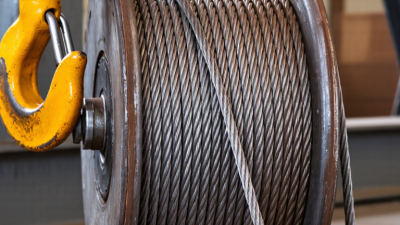
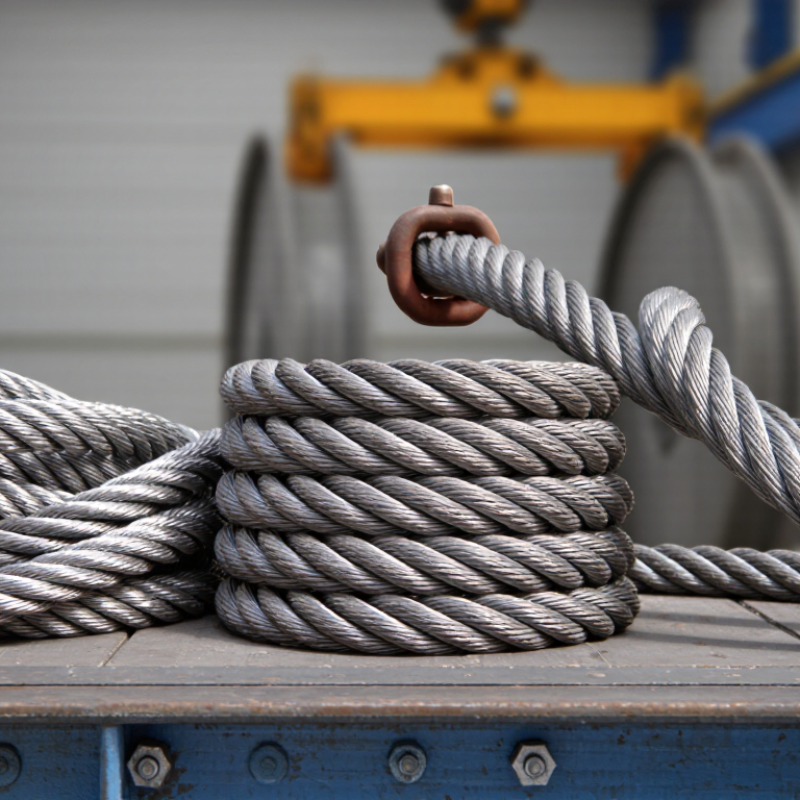
Rotation-resistant ropes use multiple layers of strands twisted in opposing directions. This structure reduces spinning when a freely suspended load moves. It suits tower cranes, mobile cranes, and long lifting systems. Compacted strand ropes press the wires tightly together, creating a smoother outer surface and greater metallic area. They can improve crushing resistance on crowded drums. Their compact surface also makes some damage less obvious. That matters.
The core changes performance too. An independent wire rope core supports the strands under heat, pressure, and repeated bending. Fiber cores are lighter and more flexible, but they may compress more easily under severe drum pressure. Seale, Warrington, and filler-wire arrangements balance strength, flexibility, and contact between wires. Field checks should examine broken wires, flattened sections, corrosion, and abnormal lay changes. A rope may look clean but still have internal fatigue. Selection remains imperfect when operators ignore sheave diameter, reeving direction, lubrication, or shock loading. Small details matter.
What Are the 2026 Top Heavy-Duty Crane Rope Types?
Main types of heavy-duty crane ropes compared by their nominal wire count in the rope body. A higher wire count generally indicates a finer-wire construction, while the best choice still depends on bending cycles, abrasion, crushing, rotation control, and the required safety factor.
How to read the chart: Values are calculated from the nominal rope construction and exclude the independent core. For example, 6×36 contains approximately 216 outer wires because 6 strands × 36 wires per strand = 216 wires. Actual wire diameters, metallic areas, breaking forces, and allowable loads vary by rope diameter, grade, lay, core, and applicable standard.
How Materials and Rope Designs Affect Crane Performance
What Are the 2026 Top Heavy Duty Crane Rope Types?
How Materials and Rope Designs Affect Crane Performance
Heavy duty crane ropes are not chosen by diameter alone. In 2026, compacted strand ropes remain popular for demanding lifts because their smoother surfaces reduce crushing and abrasion. Rotation-resistant ropes help control suspended loads, especially when long falls or narrow lifting paths create twisting forces. Galvanized steel improves corrosion resistance in outdoor yards, while bright steel can suit cleaner, controlled environments. Each material changes fatigue life, grip, and inspection needs.
Rope design matters as much as metal quality. An independent wire rope core supports strength and stability under repeated loading. Compact strands pack more steel into the same space, but they may hide internal damage during visual checks. That is a real weakness. Synthetic fiber ropes reduce weight and handling effort, yet heat, sharp edges, and poor winding can shorten their service life. No rope wins every lift. Load cycles, sheave diameter, reeving pattern, moisture, and operator habits must guide the selection.
Tips: Check the rope against the crane maker’s specifications and actual duty cycle. Measure broken wires, diameter loss, corrosion, and drum spooling regularly. Keep records. A rope can look acceptable while suffering internal fatigue. Use trained inspectors, and replace questionable rope before performance becomes an expensive lesson.
How to Select the Right Crane Rope for Each Lifting Task
What Are the 2026 Top Heavy Duty Crane Rope Types?
Selecting a crane rope starts with the lifting task, not the catalog photograph. Rotation-resistant ropes suit long, vertical lifts where the load may spin. Compacted strands provide higher metallic area and improved crushing resistance on multilayer drums. Galvanized ropes perform better in damp or coastal conditions. Stainless steel is useful where corrosion control matters, but it may not offer the best cost-to-strength balance.
Match rope construction to drum diameter, sheave size, fleet angle, lift speed, and load cycle. The Wire Rope Users Manual advises checking bending fatigue, abrasion, crushing, and rotation behavior together. A rope with higher nominal strength can still fail early when the D/d ratio is too small. That detail is often missed.
ISO 4309:2017 requires documented inspection and discard decisions, including broken wires, diameter reduction, corrosion, and distortion. ASME B30.30-2023 also emphasizes inspection, installation, and operating controls.
Measure it regularly. Record it clearly. Use the manufacturer’s certified breaking force, then apply the crane’s required design factor. For a frequently cycled hoist, prioritize fatigue performance over maximum breaking strength. For a single heavy lift, rotation control and spooling stability may matter more.
My practical concern is simple: selecting by strength alone is incomplete. Real lifting conditions change, and the inspection history should influence every replacement decision.