Top 10 Oilfield Ropes to Boost Your Procurement Strategy?
In the competitive landscape of oil exploration, the selection of **Oilfield Ropes** plays a crucial role in enhancing operational efficiency. Recent industry reports indicate a projected growth of 6.5% in the global oilfield equipment market by 2025. This growth underscores the increasing demand for robust and reliable materials in oilfields. Oilfield ropes are essential for various applications, such as lifting, hauling, and securing equipment in challenging environments.
Choosing the right ropes can significantly impact safety and productivity. A study by the International Association of Drilling Contractors highlighted that over 30% of operational downtime stems from equipment failures. Reliable oilfield ropes can reduce this risk. However, with numerous options on the market, procurement strategies must be refined. Many companies struggle to balance quality and cost, leading to potential operational setbacks.
It is crucial for procurement teams to assess their options. Evaluating durability, tensile strength, and weather resistance is essential. The right oilfield ropes can improve not only safety but also overall project timelines. In an industry where every delay can be costly, making informed choices is imperative. Emphasizing expertise in selecting oilfield ropes can ultimately contribute to a successful procurement strategy.
Top Considerations for Selecting Oilfield Ropes in Procurement
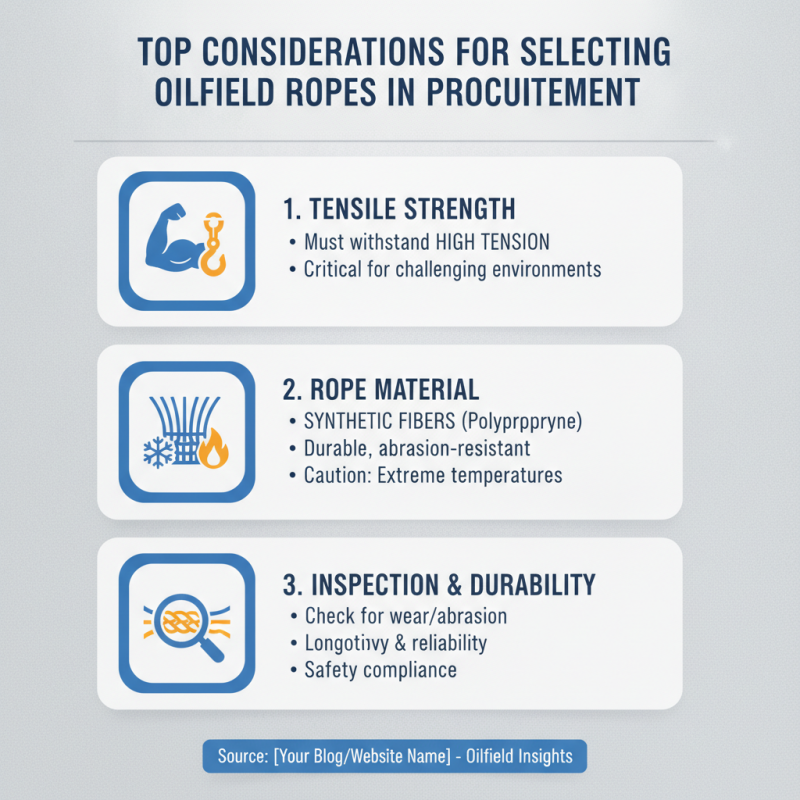
When selecting oilfield ropes, consider their tensile strength. Ropes must withstand high tension, especially in challenging environments. Inspecting the rope’s material is essential. Synthetic fibers, like polypropylene, offer durability and resistance to abrasions. However, they may not perform well in extreme temperatures.
Another factor is the rope’s diameter. Thicker ropes often provide higher load capacity. Yet, they can be cumbersome to handle. It's crucial to balance load requirements with ease of use. Additionally, evaluate the rope's flexibility. Stiff ropes may limit maneuverability, while overly flexible ones may lack support.
Finally, review the rope's longevity. Ropes exposed to harsh chemicals or sunlight may degrade quickly. Regular inspections are necessary to ensure safety and efficiency. Evaluate the history of failures and maintenance for better decision-making. By considering these factors, you can improve your procurement strategy significantly.
Material Types and Their Impact on Oilfield Rope Performance
Choosing the right material for oilfield ropes significantly impacts their performance. Different materials exhibit unique characteristics that directly affect durability, strength, and flexibility. Synthetic fibers, such as polyester and nylon, are popular due to their high tensile strength and resistance to abrasion. These materials perform well in various weather conditions, ensuring consistent reliability.
However, natural fibers like manila still hold value for specific applications. They offer excellent grip and shock absorption, making them useful in certain scenarios. Yet, they may not withstand harsh environments as effectively as synthetic alternatives. This trade-off between natural and synthetic fibers requires careful consideration in procurement strategies.
The decision also hinges on cost and availability. While synthetic ropes may be pricier upfront, their longevity can result in lower overall expenditure. Knowing this, operators must reflect on their needs. Are the short-term savings worth it if performance suffers? This question underlines the importance of evaluating material choices thoroughly.
Industry Standards and Certifications for Oilfield Ropes
When procuring oilfield ropes, understanding industry standards and certifications is crucial. These specifications ensure that the ropes meet performance and safety criteria essential for demanding environments. Certifications like API 7K and ISO 9001 guarantee that products are rigorously tested for durability and reliability. They reflect adherence to global standards that enhance the operational efficiency of oilfield activities.
However, not all manufacturers maintain these standards consistently. Some may cut corners, leading to inferior products that compromise safety. Regular audits help identify these discrepancies. Periodic assessments can reveal whether companies uphold their certifications. This transparency is vital for maintaining trust in suppliers and ensuring equipment safety.
A critical consideration is the type of material used in rope production. Synthetic fibers tend to outperform traditional materials in performance metrics, yet not all synthetic products are created equal. Distinguishing between high-quality and subpar options requires experience and a keen eye. This complexity underscores the importance of ensuring that suppliers can substantiate their claims with proper documentation and testing results.
Top 10 Oilfield Ropes to Boost Your Procurement Strategy
| Rope Type |
Material |
Diameter (mm) |
Breaking Strength (kN) |
Industry Standards |
Certifications |
| High Tenacity Nylon |
Nylon |
12 |
75 |
ISO 9001 |
CE, API |
| Polyester Rope |
Polyester |
16 |
90 |
ISO 14001 |
TUV, API |
| Wire Rope |
Steel |
18 |
120 |
ASTM A931 |
ISO, API |
| Polypropylene Rope |
Polypropylene |
10 |
50 |
BS 1752 |
CE |
| Aramid Rope |
Aramid |
14 |
85 |
ISO 9001 |
API |
| Coated Wire Rope |
Steel with Coating |
20 |
140 |
EN 12385 |
TUV, API |
| Dynamic Climbing Rope |
Nylon |
11 |
70 |
UIAA |
CE |
| Rope Sling |
Synthetic Fiber |
15 |
100 |
ASME B30.9 |
ISO, API |
| Nautical Rope |
Polyester |
24 |
130 |
ISO 1795 |
API, CE |
Cost-Benefit Analysis of High-Grade vs. Standard Oilfield Ropes
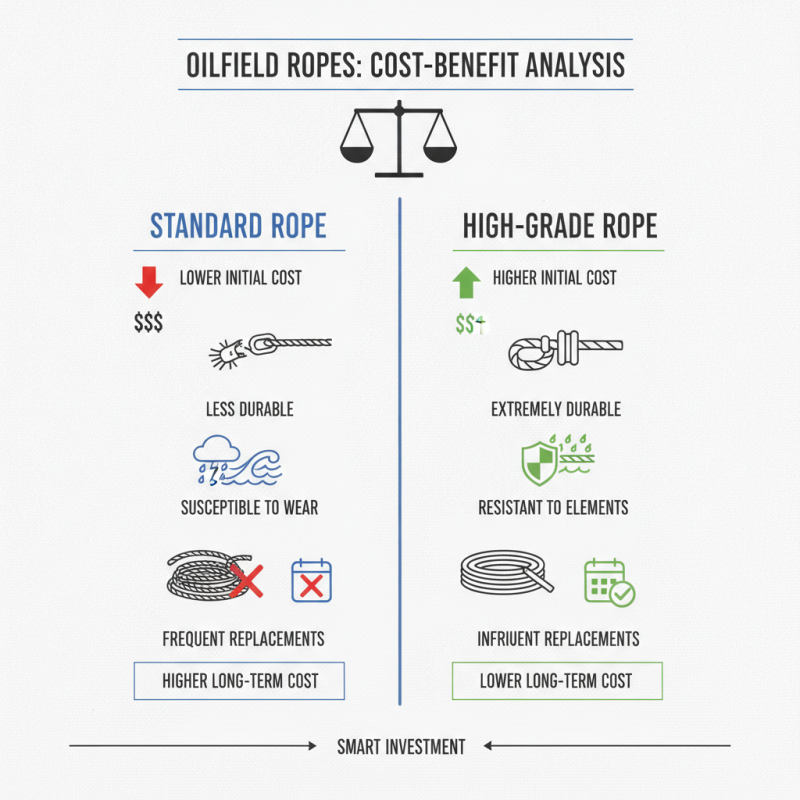
When considering the procurement of oilfield ropes, conducting a cost-benefit analysis is crucial. High-grade ropes may initially seem more expensive, but their durability often leads to long-term savings. They withstand harsh environmental conditions and resist wear and tear. This longevity translates to fewer replacements.
Standard ropes, on the other hand, might be tempting for budget-conscious decisions. However, they can lead to higher operational costs. They tend to break easier and may require more frequent replacements. This could lead to project delays and increased downtime. Investing in quality can ultimately enhance efficiency.
Tips: Analyze your specific needs before making a choice. Consider the environment in which the ropes will be used. Durability matters! Also, review the maintenance and handling practices for different rope types. It’s essential to train personnel on proper usage. Small investments in training can prevent costly accidents. Balancing cost and quality is a reflection of strategic procurement.
Market Trends and Innovations in Oilfield Rope Technology
The oilfield industry relies heavily on advanced rope technology. Innovations in materials and designs drive efficiency and safety. Recently, synthetic fibers have gained popularity for their durability and lightweight properties. These ropes offer improved resistance to harsh environments, reducing wear and tear. Their ability to handle heavy loads makes them vital in various applications, from drilling to hoisting.
Market trends indicate a shift towards eco-friendly materials. Companies are exploring sustainable options that reduce environmental impact. This transition requires careful evaluation of material sources and production processes. While the benefits are clear, challenges in material durability and performance remain. Adopting new technologies can be costly, and industry players must weigh these factors against long-term gains.
Maintaining reliability in demanding conditions is crucial. Ropes must withstand extreme temperatures and chemical exposure without compromising performance. Testing and certification processes are essential for ensuring safety. However, discrepancies in quality may still occur between manufacturers. Transparency in sourcing and production can help companies cultivate trust in their procurement strategies. As the industry evolves, staying informed about these innovations will be key to successful operations.