Leave Your Message

China Top Lifting Crane Rope Manufacturers and Suppliers

Choosing a reliable Lifting Crane Rope manufacturer in China takes more than comparing prices. Crane ropes face repeated tension, bending, abrasion, and changing site conditions. A small mismatch in rope diameter, construction, or core can affect sheave fit and service life. Details matter.

When assessing suppliers, buyers should check their experience with the required rope type, production capabilities, and quality-control practices. Ask about wire grade, rope construction, core material, lubrication, coating, and available end fittings. Confirm that stated specifications match the crane’s operating conditions and the equipment manufacturer’s requirements. Reliable suppliers should be able to provide clear product data and relevant inspection records. Ask directly. Documentation helps, but it does not replace careful review of the actual order and product.

This guide introduces leading Chinese manufacturers and suppliers of crane rope, while highlighting practical points for comparing them. It considers product range, technical support, customization, communication, and delivery capability. Readers can use these details to build a shortlist, then verify current specifications, certifications, references, and sample quality with each supplier. Rankings and online claims may not tell the whole story. That deserves a second look. A supplier that suits one lifting application may not suit another. Before purchasing, compare the rope’s construction and performance requirements against the load, duty cycle, environment, and maintenance plan. Clear questions at the start can prevent costly misunderstandings later.
China Top Lifting Crane Rope Manufacturers and Suppliers

Crane Ropes: Construction, Functions, and Key Applications

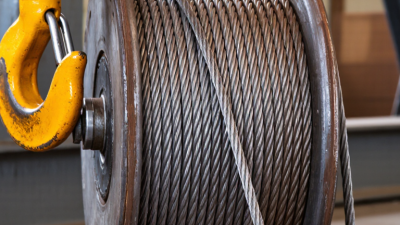
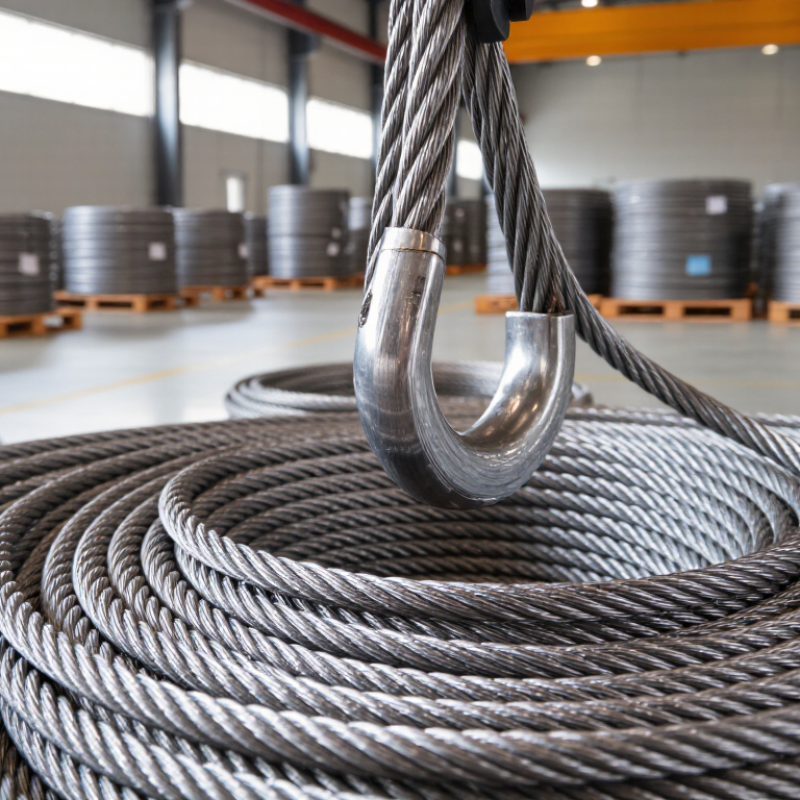
Crane ropes are assemblies of steel wires formed into strands, then laid around a central core. Individual wires carry tension, while the strands give the rope flexibility and help it withstand repeated bending. Fiber or steel cores affect flexibility, crush resistance, and support under pressure. Lubricant inside the rope limits friction and corrosion, but it can dry out or become contaminated. Small details matter.

During lifting, the rope transfers force between the drum, sheaves, hook block, and suspended load. As the drum winds, the rope must spool evenly; crossed wraps can cause crushing and uneven wear. Sheaves with suitable groove dimensions reduce abrasion, while sharp edges can damage outer wires. Allowable load depends on rope construction, diameter, termination, reeving, and condition—not diameter alone. That is easy to overlook.

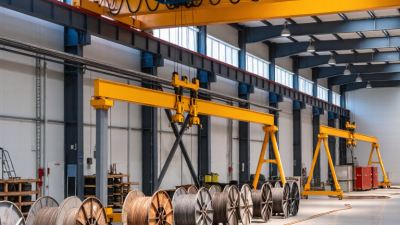
These ropes serve tower, mobile, overhead, and port cranes, handling loads such as steel beams, containers, and machinery. Outdoor ropes face rain and grit; indoor systems may undergo frequent bending cycles. Inspect for broken wires, corrosion, flattening, kinks, and diameter changes, following equipment instructions and applicable standards. No shortcut works. A rope may look acceptable from the ground yet conceal internal damage, so close, documented checks matter. Even experienced crews can miss wear when schedules tighten.

Common Crane Rope Types and Their Technical Specifications

Crane rope selection starts with the lift, drum, and reeving arrangement—not the catalogue label. Common constructions include 6×19 and 6×36, where the first number indicates strand count and the second indicates wires per strand. Fewer, larger wires generally resist abrasion better; finer wires bend more readily over small sheaves. For rotation-sensitive lifts, multi-strand designs such as 19×7 are often considered. Details matter.

ISO 2408:2017 specifies rope strength grades including 1,570, 1,770, 1,960, and 2,160 MPa. These grades describe wire tensile strength, not the rope’s permitted lifting load; minimum breaking force must be checked for the exact diameter and construction. An independent wire rope core can improve support under crushing loads, while a fiber core may offer greater flexibility. They are not interchangeable. ISO 4309:2017 inspection guidance considers broken wires, diameter reduction, corrosion, and deformation when assessing retirement. A practical check includes measuring the rope at several points and examining the sections that repeatedly pass over sheaves. Standards help, but field records can be incomplete; that is a real weakness. Suppliers should state construction, core, lay, grade, nominal diameter, and minimum breaking force on technical documents.

China Top Lifting Crane Rope Manufacturers and Suppliers - Common Crane Rope Types and Their Technical Specifications
Rope construction Construction and flexibility Typical core Rotation characteristics Common crane applications Typical nominal diameter range Common rope grades Relevant standards
6×19 class Six strands with a nominal 19-wire-class construction; comparatively robust, with fewer wires per strand than more flexible constructions. Fiber core or independent wire rope core (IWRC), depending on design. Ordinary non-rotation-resistant rope; the rope can develop torque under load. General lifting duties, winches, and applications where abrasion resistance is important and sheave bending is moderate. Commonly available in approximately 6–60 mm; actual ranges vary by construction and supplier. Often supplied in grades such as 1770, 1960, or 2160 MPa, subject to product design. EN 12385-4; ISO 2408
6×36 class Six strands in the 36-wire class; the greater number of wires generally provides more flexibility than a 6×19-class rope of comparable size. Fiber core or IWRC, depending on required strength and service conditions. Ordinary non-rotation-resistant rope. Crane hoist and reeving systems with repeated bending over sheaves, subject to the rope manufacturer’s design limits. Commonly available in approximately 8–80 mm; product availability varies. Common grades include 1770, 1960, and 2160 MPa; verify the selected rope’s certificate. EN 12385-4; ISO 2408
8×19 class Eight strands with a 19-wire-class construction; the eight-strand design can provide a more even contact pattern on some sheaves. Fiber core or IWRC, depending on rope design. Generally not rotation-resistant unless specifically designed and identified as such. Hoist ropes and reeving arrangements where the crane and sheave design are suitable for an eight-strand rope. Commonly available in approximately 8–64 mm; confirm the range for the particular construction. Grades such as 1770, 1960, or 2160 MPa may be available, depending on design. EN 12385-4; ISO 2408
18×7 rotation-resistant Multi-strand construction with layers arranged to reduce torque and rotation under load; correct reeving and installation remain essential. Independent wire rope core or a specially designed central core, as specified by the rope manufacturer. Rotation-resistant; the degree of rotation depends on construction, load, and reeving conditions. Single-part hoisting and lifting situations where load rotation must be controlled, when approved for the crane configuration. Commonly available in approximately 8–60 mm; construction-specific limits apply. Strength grades vary by design; use the certified grade and minimum breaking force for the exact rope. EN 12385-4; ISO 2408
35×7 rotation-resistant Multi-strand, multi-layer construction designed to provide high resistance to rotation; requires careful handling and installation. Specially designed core or core strand arrangement, as specified for the rope construction. Rotation-resistant; performance is construction- and application-dependent. High-lift or single-part crane hoisting where rotation control is required and the equipment manufacturer permits this rope type. Commonly available in approximately 10–80 mm; confirm the approved size range for the selected design. Grade and minimum breaking force are product-specific and must be checked on the rope certificate. EN 12385-4; ISO 2408
Compacted-strand rope Strands are compacted during manufacture, producing a smoother outer surface and typically improving resistance to external wear compared with a similar conventional construction. Usually IWRC for demanding crane service; core options depend on the specific design. Rotation behavior depends on the underlying strand arrangement; compacting alone does not make a rope rotation-resistant. Crane hoist ropes exposed to high contact pressure or demanding sheave and drum service, subject to equipment compatibility. Commonly available in approximately 8–60 mm; exact availability depends on construction. Available grades depend on the base construction and manufacturer specification. EN 12385-4; ISO 2408

Specification note: Diameter ranges and strength grades shown are indicative examples of commonly available products, not universal limits. Minimum breaking force depends on rope construction, nominal diameter, grade, core, and manufacturing specification. Select a crane rope using the equipment manufacturer’s requirements and the rope’s certified data, and check compatibility with the sheaves, drum, reeving arrangement, and operating conditions.

How to Evaluate Crane Rope Manufacturers and Suppliers in China

China Top Lifting Crane Rope Manufacturers and Suppliers

How to Evaluate Crane Rope Manufacturers and Suppliers in China

Evaluate a supplier by checking how it controls each production step, not just by comparing prices. Ask for rope construction details, steel grade, nominal diameter, minimum breaking force, and batch-specific test records. The figures should match the applicable product standard, such as ISO 2408:2017, which specifies requirements for steel wire ropes. Request a sample certificate and confirm that its batch number matches the rope tag and shipping documents.

Small mismatch? Pause and ask why.

Inspection support matters after delivery, too. ISO 4309:2017 describes inspection and discard criteria for crane ropes, including broken wires, corrosion, deformation, and diameter reduction. A capable supplier should explain how rope construction affects inspection thresholds and provide usable maintenance guidance. Ask to see actual inspection records, not only a polished brochure. If possible, review a production sample and check its diameter at several points with a calibrated instrument. One reading is not enough. Also assess response times, complaint handling, and whether technical staff can discuss sheave diameter, operating conditions, and lubrication. A supplier may have strong equipment but weak documentation; that gap deserves attention before purchase. These checks cannot guarantee trouble-free service, but they make comparisons more evidence-based.

Notable Chinese Manufacturers and Suppliers of Crane Ropes

China has a broad network of crane-rope manufacturers and specialist suppliers. Their products serve tower cranes, port equipment, hoists, and other lifting systems. Capabilities vary, so buyers should look beyond product labels. Rope diameter, strand construction, core type, lay direction, and surface finish all affect performance. A suitable supplier can explain how these details match the crane, sheaves, load, and working environment.

Ask for traceable batch records and test reports, not only a polished catalog. Check whether the documents identify the supplied rope and show relevant measurements or breaking-force results. Samples can help assess finish and consistency, but they cannot replace production checks. Paperwork can mislead. The specification also needs review by a qualified lifting-equipment professional, especially when replacing an existing rope.

Supplier discussions should cover lubrication, corrosion exposure, storage, and delivery packaging. A rope may arrive on a sound reel yet still need careful handling before installation. Ask how the supplier protects it from moisture and deformation during transit. Communication matters, too: clear answers about tolerances and inspection methods are useful, while vague promises deserve follow-up. No supplier’s claims remove the need to check the rope against the equipment’s operating requirements.

Quality Standards, Supplier Verification, and Sourcing Considerations

When sourcing crane wire rope from Chinese manufacturers or suppliers, start with the rope’s intended duty. Share the crane type, working load, reeving arrangement, sheave dimensions, and operating environment. These details affect rope construction, diameter, core type, and lubrication. A catalogue description alone is not enough.

Ask for current quality-system documentation and batch-specific test records. Check that certificates identify the rope construction, nominal diameter, tensile grade, and test results. Compare measured diameter and lay with the agreed specification, and confirm how each batch is traceable. Small details matter. Paperwork may look tidy while production varies, so review recent records rather than relying on a single sample. Where the application is safety-critical, consider independent testing and have a qualified engineer confirm suitability.

Verify the supplier’s actual production and inspection capabilities. A video call or factory visit can clarify whether testing equipment is maintained and whether incoming wire, finished rope, and packaging are checked. Request a sample, but treat it as one data point, not proof of every shipment. Confirm lead time, minimum order quantity, packaging, and procedures for handling nonconforming goods in writing. There is no perfect checklist; missed details happen. Keep a clear specification and compare delivered markings and documents against it before installation. Follow the crane manufacturer’s instructions and applicable local requirements.

Wire-Rope Sling Inspection: OSHA Removal Thresholds

Use these U.S. OSHA thresholds as one check when verifying lifting-sling quality and inspection procedures. They apply to wire-rope slings, not universally to crane hoist ropes.

How to read the chart: Remove a wire-rope sling from service if it has 10 randomly distributed broken wires in one rope lay, or 5 broken wires in one strand in one rope lay. Confirm applicable requirements for the equipment, jurisdiction, and use. Source: OSHA 29 CFR 1910.184(e)(5)(i).