Leave Your Message

What Is High Performance Wire Rope and How Does It Work?

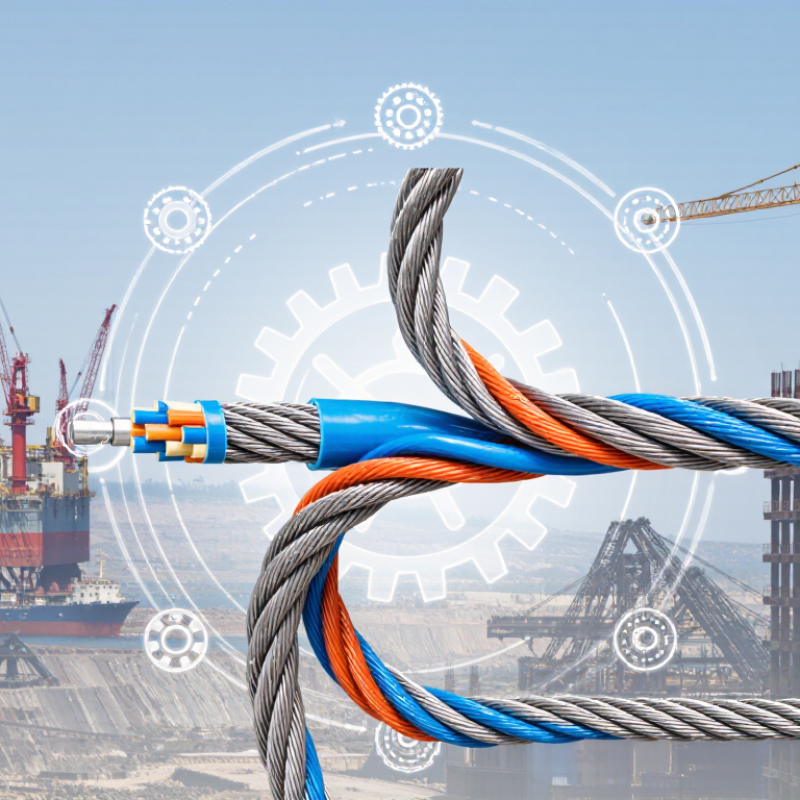
High Performance Wire Ropes support demanding lifting, offshore, mining, construction, and industrial applications. They combine high-strength steel, controlled strand geometry, and specialized coatings. The result is a rope that can carry heavy loads while resisting fatigue, crushing, abrasion, and corrosion.

The numbers show why this technology matters. Grand View Research’s Wire Rope Market Size, Share and Trends Analysis, 2024–2030, identifies construction, oil and gas, mining, and marine operations as major demand sectors. Its analysis also expects continued market growth through 2030, driven by infrastructure investment and heavier lifting requirements. However, market growth alone does not prove performance. Actual results depend on rope design, sheave diameter, fleet maintenance, and operator practice.

Small details matter.

A high-performance rope may use compacted strands that create a smoother outer surface. This design can improve contact with sheaves and reduce localized wear. Plastic-filled cores may also protect internal wires from moisture and crushing forces. Yet, these benefits are not automatic. ISO 4309:2017 stresses regular inspection, discard criteria, and accurate recordkeeping for crane ropes. The standard reminds users that hidden internal damage can develop before surface failure becomes obvious.

This guide explains what High Performance Wire Ropes are and how they work under real operating conditions. It examines construction, load distribution, fatigue behavior, lubrication, and inspection. Some explanations simplify complex engineering. That limitation deserves attention. A rope that performs well in a laboratory may behave differently beside saltwater, dust, vibration, or uneven sheave alignment. Reliable selection therefore requires engineering data, manufacturer documentation, and experienced field judgment.
What Is High Performance Wire Rope and How Does It Work?

High-Performance Wire Rope: 1,960–2,160 MPa Steel and Compact Cores

High-performance wire rope begins with stronger steel. ISO 2408:2017 identifies nominal tensile grades reaching 1,960 and 2,160 MPa. These values describe the steel’s minimum tensile strength, not the rope’s complete working capacity. A 2,160 MPa wire can resist higher loads with less metallic area. That often reduces rope diameter, mass, and sheave size.

Its real advantage comes from construction. Compacted strands press neighboring wires closer together, increasing the metallic cross-sectional area. A compacted core also supports outer strands more evenly. During lifting, this structure can reduce strand movement and contact pressure. EN 12385-2:2020 requires rope design and manufacturing controls that support consistent performance. Field inspection still matters.

On a crane drum, the rope bends repeatedly around sheaves. High-strength wires tolerate severe loading, but they are not invincible. Fatigue, poor lubrication, fleet angles, and crushing can shorten service life. That assumption can fail.

A practical test is visible. Inspectors look for broken wires, flattened sections, corrosion, and diameter loss. ISO 4309 provides guidance for discard criteria on crane ropes. The measured breaking force must also exceed the application’s design load after safety factors. Higher tensile strength does not excuse incorrect reeving or undersized sheaves. In practice, installation quality can erase much of the steel’s advantage.
How 6×K36WS Strand Geometry Transfers Load Through the Rope

High-performance wire rope is not defined by strength alone. Its behavior depends on how each wire, strand, and core shares force. In a 6×K36WS rope, six shaped strands surround the core. Each strand contains 36 wires arranged in a Warrington-Seale pattern. Different wire diameters fill the strand more efficiently. Less empty space means stronger support between neighboring wires.

When a crane lifts a load, tension travels along the rope axis. The outer strands carry much of the direct load, while the core helps maintain the rope’s shape. Contact pressure spreads across several wires instead of concentrating at one sharp point. This can reduce local crushing and improve fatigue resistance during repeated bending over sheaves. The geometry also helps the rope resist flattening, although it does not eliminate damage.

Real performance is less tidy than a diagram suggests. Sheave diameter, fleet angle, lubrication, and uneven loading can change the stress pattern. A rope that looks sound may have internal wire breaks. That is why experienced inspectors check diameter loss, broken wires, corrosion, and deformation together. Measurements should be recorded under consistent conditions. Small differences matter.

The 6×K36WS design transfers load smoothly, but only when the entire lifting system suits it. Installation errors can cancel much of its engineering advantage. A useful question remains: is the rope carrying load evenly, or only appearing to do so?

Breaking Force, Working Load, and Typical 5:1 Lifting Safety Factors

What Is High Performance Wire Rope and How Does It Work?

High performance wire rope is engineered to carry heavy loads with improved strength, flexibility, and fatigue resistance. Its compact strands reduce stretch and help the rope pass smoothly over sheaves. In lifting work, breaking force is the load that causes the rope to fail during a controlled test. It is not a safe operating limit.

Working load limit, or WLL, is much lower than breaking force. A common lifting safety factor is 5:1. For example, a rope with a 50,000-pound breaking force may have a 10,000-pound WLL. This calculation assumes suitable terminations, correct reeving, and a straight lift. Angled loading, sharp bends, shock loading, corrosion, and worn sockets can reduce capacity. The simple formula helps, but it is not the whole answer. Field inspections often reveal problems before paperwork does.

Tips: Check the rope before every lift. Look for broken wires, flattened sections, rust, birdcaging, and crushed strands. Confirm the rope diameter with a caliper, not only by sight. Keep the load centered and avoid sudden starts. A clean rope can still be damaged inside. Use certified load data and follow the rope maker’s inspection criteria. Do not guess the WLL after changing an end fitting. That shortcut may save minutes, but it can remove the intended safety margin.

Fatigue Resistance and Bend Performance with Common D/d ≥ 18 Guidance

High performance wire rope is engineered to carry heavy loads while resisting repeated bending. Its strands, wires, and core work together under tension. The real test begins at the sheave. Each passage bends the rope, then releases it.

A common design guide is D/d ≥ 18. Here, D means sheave diameter, while d means rope diameter. A larger ratio usually reduces bending stress and delays wire fatigue. This guidance is useful, not absolute. Some ropes require larger sheaves, especially under high loads or frequent cycling. Groove shape matters too. A worn groove can pinch the rope and create uneven pressure. That damage may appear as broken wires, flattened sections, or a rough metallic sound.

Field performance also depends on alignment, fleet angle, speed, lubrication, and installation quality. Keep the rope seated correctly. Avoid sudden loading. Inspect areas entering and leaving the sheave, because fatigue often develops there first. Small defects matter. They can grow quietly.

A practical inspection should record broken wires, diameter loss, corrosion, and permanent deformation. Compare findings with the rope’s rated limits and applicable safety requirements. Do not rely on appearance alone. In difficult applications, a larger D/d ratio may improve service life, but it can increase equipment size and cost. That trade-off deserves review. 马会

What Is High Performance Wire Rope and How Does It Work? – Fatigue Resistance and Bend Performance with Common D/d ≥ 18 Guidance

Engineering Topic Dimension or Parameter Typical Guidance or Value Effect on Performance
Definition High-performance wire rope A rope engineered for improved strength-to-weight ratio, bending fatigue resistance, rotation control, crushing resistance, or dimensional stability compared with conventional constructions. Allows demanding lifting, hoisting, and material-handling systems to achieve greater service capability when the rope, sheaves, drums, and operating conditions are correctly matched.
D/d Ratio Sheave or drum pitch diameter divided by rope diameter D/d = D ÷ d. A common design reference for many running-rope applications is D/d ≥ 18; the applicable rope and equipment standard should always be checked. A larger ratio reduces curvature and bending strain in the wires, generally improving fatigue life.
D/d Example 24 mm rope with a 432 mm pitch-diameter sheave D/d = 432 ÷ 24 = 18 This meets the common D/d ≥ 18 reference point, provided that the rope construction, reeving arrangement, groove profile, and applicable design standard are suitable.
Bending Fatigue Repeated passage over sheaves or onto drums Fatigue life depends on D/d, rope tension, bending frequency, sheave alignment, groove condition, lubrication, and the number of working wires. Improved fatigue resistance delays wire breaks caused by repeated tensile and bending stress cycles.
Rope Construction Number and arrangement of strands and wires More outer wires and a suitable compact or multi-strand construction can improve contact behavior and bending performance, while the correct balance of flexibility and strength is application-dependent. Construction affects flexibility, contact pressure, crushing resistance, rotation characteristics, and fatigue behavior.
Metallic Area Total steel cross-sectional area A compacted rope generally places more steel into a given nominal diameter than a conventional strand arrangement, but the certified minimum breaking force must be used for design. Greater metallic area can increase minimum breaking force and resistance to localized contact, subject to the rope specification.
Breaking Force Minimum breaking force, MBL Use the manufacturer’s certified minimum breaking force for the exact rope diameter, grade, construction, and finish. Do not estimate capacity from nominal diameter alone. Provides the reference strength for calculating the required design factor and working load limit.
Design Factor MBL divided by rated working load Design factor = MBL ÷ working load. The required factor is determined by the equipment type, lifting arrangement, regulations, and applicable standard; it is not universal. Provides a margin for dynamic loading, wear, bending, manufacturing variation, and operating uncertainty.
Sheave Groove Groove diameter, radius, and profile The groove should support the rope without pinching or excessive flattening. It must be compatible with the actual rope diameter and construction. Incorrect grooves increase contact pressure, abrasion, crushing, and localized wire fatigue.
Drum Spooling Layering, fleet angle, and winding tension Even winding and adequate back tension are required. Excessive fleet angle can cause crossovers, abrasion, and uneven loading; allowable values depend on the drum and rope system. Stable spooling reduces crushing, scrubbing, shock loading, and localized damage.
Rotation Behavior Torque and rotation under load Rotation-resistant and non-rotating ropes use specialized strand arrangements. They require controlled handling and correct termination to prevent unintended spin or strand disturbance. Improves load stability in long lifts and multi-part reeving, but may increase sensitivity to handling and bending conditions.
Lubrication Internal and external lubricant condition Lubrication should be compatible with the rope, operating temperature, and environment. It should penetrate where required and not conceal damage during inspection. Reduces inter-wire friction and corrosion, helping preserve bending-fatigue performance.
Inspection Indicators Broken wires, diameter reduction, corrosion, kinks, birdcaging, and distortion Inspection intervals and discard criteria must follow the applicable rope, lifting-equipment, and workplace-safety requirements. Early detection prevents continued operation after strength or fatigue damage has become unacceptable.
Performance Principle System matching High-performance rope does not compensate for undersized sheaves, damaged grooves, poor spooling, overloads, inadequate lubrication, or incorrect installation. The rope’s actual service life is determined by the complete rope-and-equipment system rather than by rope construction alone.

Engineering note: D/d ≥ 18 is a common reference for many running wire-rope applications, not a universal acceptance criterion. Final selection should be based on the rope manufacturer’s technical data, equipment design, applicable standards, rated load, reeving arrangement, and inspection requirements.

Inspection and Discard Criteria Under ISO 4309 for Wire Rope Service

High-performance wire rope uses compacted strands, improved steel grades, and controlled lay geometry to carry higher loads with less stretch. Its strength can hide damage. The rope may look bright while internal wires suffer fatigue, corrosion, or fretting.

ISO 4309:2017 requires inspection at commissioning, during service, after exceptional events, and at defined intervals. Inspectors should check broken wires, diameter loss, corrosion, deformation, heat damage, and birdcaging. Common discard guidance includes six broken wires in one rope lay, or three in one strand within that lay. However, the exact limit depends on rope construction, classification, and lifting duty. One number cannot safely fit every rope.

Measure diameter at the same points each time, using unloaded rope and calibrated tools. Compare readings with the original diameter, not memory. A visible reduction, flattened section, or rust scale deserves immediate isolation and technical review. ISO 4309 also stresses local damage, because one concentrated defect can justify removal before general limits are reached. HSE’s Fatal Injuries at Work in Great Britain 2023/24 report recorded 138 worker deaths across industries, reinforcing the cost of weak inspection control. In practice, rushed visual checks remain a serious gap. A clean rope is not necessarily a sound rope. My own inspection habit would still need challenging when lighting, access, or records are poor.

What Is High Performance Wire Rope and How Does It Work?

High performance wire rope uses optimized strand geometry, compacted strands, or rotation-resistant constructions to improve strength, flexibility, stability, and fatigue life. The chart compares the nominal number of wires in the strands of common rope constructions.

Under ISO 4309, discard decisions are not based on wire count alone. Inspectors assess broken wires over a rope lay, diameter reduction, corrosion, wear, deformation, and other damage. The applicable discard limits depend on the rope construction, classification, and service conditions, so the relevant ISO 4309 table and the manufacturer’s technical documentation should always be verified.