Top 10 High Performance Wire Rope Manufacturers
Choosing a wire rope manufacturer is not just a matter of comparing prices. The right supplier can affect lifting safety, equipment uptime, and long-term operating costs. High Performance Wire Ropes are engineered for demanding conditions, including heavy loads, repeated bending, abrasion, and exposure to moisture or heat. Yet the best choice depends on the application. A rope designed for a tower crane may not suit a marine winch or an industrial conveyor.
This guide introduces ten manufacturers known for producing wire ropes for challenging applications. It considers factors buyers can verify, such as product range, material options, manufacturing expertise, quality documentation, and technical support. Look closely at rope construction, strand design, core type, coating, and compatibility with existing sheaves. Small details matter. A mismatch can shorten service life, even when the rope itself is well made. Manufacturer claims also deserve careful review; published specifications do not replace application-specific engineering advice. That distinction is easy to overlook.
The list is intended as a starting point, not a universal ranking. Availability, certifications, and product lines can vary by region and change over time. Before selecting a supplier, confirm current specifications and discuss load conditions, operating cycles, and inspection needs with qualified professionals. No single manufacturer is right for every job. Sometimes the better decision is to pause and ask more questions.
Wire Rope Fundamentals: 6×19 and 6×36 Constructions, Cores, and Lay
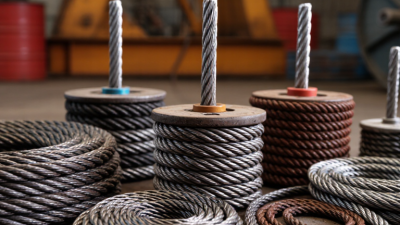
Wire rope begins with its construction. In a 6×19 rope, six strands surround a core, with about 19 wires in each strand; 6×36 uses about 36. These are construction classifications, not guarantees of one exact wire arrangement. The distinction matters at the sheave. A typical 6×19 rope uses thicker wires, giving it better resistance to surface abrasion but less flexibility. A 6×36 rope bends more readily, which can help where ropes pass over sheaves repeatedly. Its finer wires may wear faster against rough contact. Details matter. Diameter, load, sheave size, and operating conditions all affect service life.
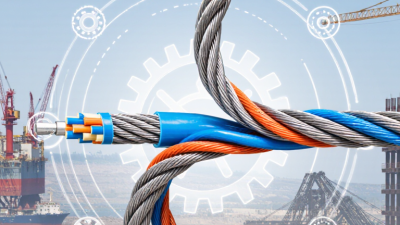
The core supports the strands and influences how the rope behaves. A fiber core can add flexibility, but may offer less resistance to crushing and heat than an independent wire rope core (IWRC). An IWRC generally provides greater structural support under heavy loads. Lay also affects handling: regular lay places wires opposite the strand direction, while Lang lay places them in the same direction. Lang lay can distribute wear along the rope, but may be more prone to rotation and requires careful handling. A chart helps, but it cannot settle every selection. I have seen otherwise sound choices made without checking the actual sheave diameter. That is easy to overlook.
Performance Grades: 1,570–2,160 MPa Tensile Strength and Minimum Breaking Force
For high-performance wire ropes, tensile-strength grades commonly range from 1,570 to 2,160 MPa. ISO 2408:2017 specifies rope-grade requirements and minimum breaking-force values for steel wire ropes. These grades describe the strength class of the wires, not the rope’s complete lifting capacity. Small differences matter. A rope’s minimum breaking force also depends on diameter, construction, core, and metallic cross-sectional area. Two ropes with the same nominal diameter can therefore have different breaking-force ratings.
When comparing manufacturer specifications, check the stated minimum breaking force, test basis, and rope construction—not the strength grade alone. ISO 2408 provides calculation and verification methods, while ISO 4309:2017 addresses inspection and discard criteria for ropes in service. These references help buyers compare published values with consistent criteria. A higher grade may support greater breaking force in a given design, but it does not automatically mean longer service life. Abrasion, bending cycles, corrosion, and poor reeving can reduce performance. I would still want to see test documentation for the exact rope supplied; grade labels alone leave room for assumptions.
High-Performance Wire Rope: Tensile Strength Grades
Common nominal wire tensile-strength grades, shown in MPa. This chart compares performance grades, not manufacturer rankings.
Tensile-strength grade describes the strength class of the wire, not the rope’s minimum breaking force. Minimum breaking force depends on factors including rope diameter, construction, core, and the applicable standard.
Standards and Testing: ISO 2408 and EN 12385 Requirements for Steel Wire Ropes
Standards and Testing: ISO 2408 and EN 12385 Requirements for Steel Wire Ropes
High performance begins with a rope that matches its duty, not just its breaking force.
ISO 2408 sets requirements for general-purpose steel wire ropes, including construction, dimensions, mechanical properties, inspection, and marking. EN 12385 is a series of European standards addressing safety requirements for steel wire ropes, with parts covering different applications and testing.
Buyers should check which edition and part apply to their intended use.
A familiar standard number alone is not enough.
Testing turns specifications into measurable evidence.
Depending on the rope and applicable requirements, checks may include diameter, lay, tensile properties, and breaking force. A sample that meets a breaking-force target can still be unsuitable if its construction, lubrication, or dimensional tolerance does not fit the sheave and operating conditions.
Small details matter.
Ask for traceable test documentation that identifies the rope construction and the relevant standard. Compare reported results with the required acceptance criteria, rather than relying on a certificate’s presence alone. In practice, paperwork can be incomplete, and test results do not predict every service condition.
That gap deserves attention.
Clear specifications and independent verification help manufacturers and purchasers identify mismatches before a rope enters service.
Manufacturer Comparison Criteria: Capacity, Coatings, Certification, and Quality Control
Comparing high-performance wire rope manufacturers starts with usable capacity, not impressive factory photographs.
The World Steel Association’s World Steel in Figures 2024 reports 1,892.2 million tonnes of crude steel production worldwide in 2023. That figure describes the upstream market, not any supplier’s rope output. Ask for annual production by diameter, construction, and finish, plus realistic lead times and available breaking-force test capacity.
Look past the brochure.
Coatings need evidence, too.
Galvanized wire can suit exposed service, but coating specifications should match the rope’s environment and intended use. ISO 2408:2017 sets requirements for steel wire ropes, including dimensional and mechanical properties. Compare certificates against the actual rope construction and order; a generic certificate proves little about a specific batch.
The detail matters.
Quality control is where claims become measurable.
Request traceable wire-lot records, test results, inspection procedures, and documented handling of nonconforming products. ISO 4309:2017 provides guidance on care, inspection, and discard criteria for crane ropes. A supplier’s internal checks should complement, not replace, application-specific inspections.
One uncomfortable point: current certificates can coexist with thin batch records. I would verify the raw evidence before treating a quality rating as settled.
Top 10 High-Performance Wire Rope Manufacturers and Their Industry Applications
High-performance wire rope manufacturers serve industries where load control and fatigue resistance matter every day. Their products may look similar on a spool, but strand geometry, core construction, and steel grade affect flexibility and service life. The details matter. A rope designed for repeated crane lifts may not suit a mine hoist or an elevator system.
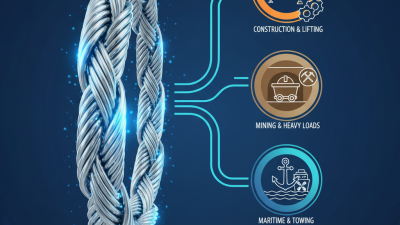
In ports and construction sites, compacted ropes can support heavy lifts while fitting tightly over sheaves. Mining operations often need ropes built for long runs, abrasion, and changing loads.
Offshore equipment faces salt spray and demanding handling conditions, so coating choice and inspection access deserve attention. No single design fits every job. Even a small mismatch in diameter or bend ratio can increase wear.
When comparing manufacturers, buyers should review documented breaking-force tests, production traceability, and fatigue-test methods. Ask how the rope performs with the actual sheave size, speed, and operating environment. Clear guidance on lubrication and inspection intervals is useful, too. A datasheet cannot predict every field condition. That is worth remembering. Trial installations sometimes reveal vibration or handling issues that laboratory figures do not show. Manufacturers that discuss these limits plainly can help engineers make safer, more informed selections.